Part 1 – Prologue
I think I’m in the right place. Right? Yes, I must be. The terrain to my left looks even more dangerous than the rock I’m climbing right now. And to the right, hmm, that looks really steep. No handholds, nothing to put my feet on either. I also passed an old piton a little while ago. Yes, I’m definitely in the right place. Right on route. Just keep climbing.
Or wait a minute, it’s actually been quite a while since that last piton. And to be honest, I’m in some pretty dangerous terrain here. It’s getting steeper and steeper, and I can’t quite see where the route goes from here. It doesn’t look that far to the next ledge, but then again, that’s what I thought five minutes ago. This is no place to make mistakes. Besides, I’ve never been here before, and I’m completely alone. The truth is, I haven’t got the slightest clue whether I’m on the right route. Shit!
Once again, I check my watch, although I know perfectly well that it’s no help on this part of the route. The steep rock face I’m on is causing GPS drift: even while I’m standing still, I can see my position on the map shifting from left to right. So I take out my phone again and study the photos and the topo. I also try to recall the accounts of other climbers that I read while preparing for this: “Head up through the Slovenska grapa, then veer slightly to the right, towards the exit of the rock face.” Sounds easy enough.
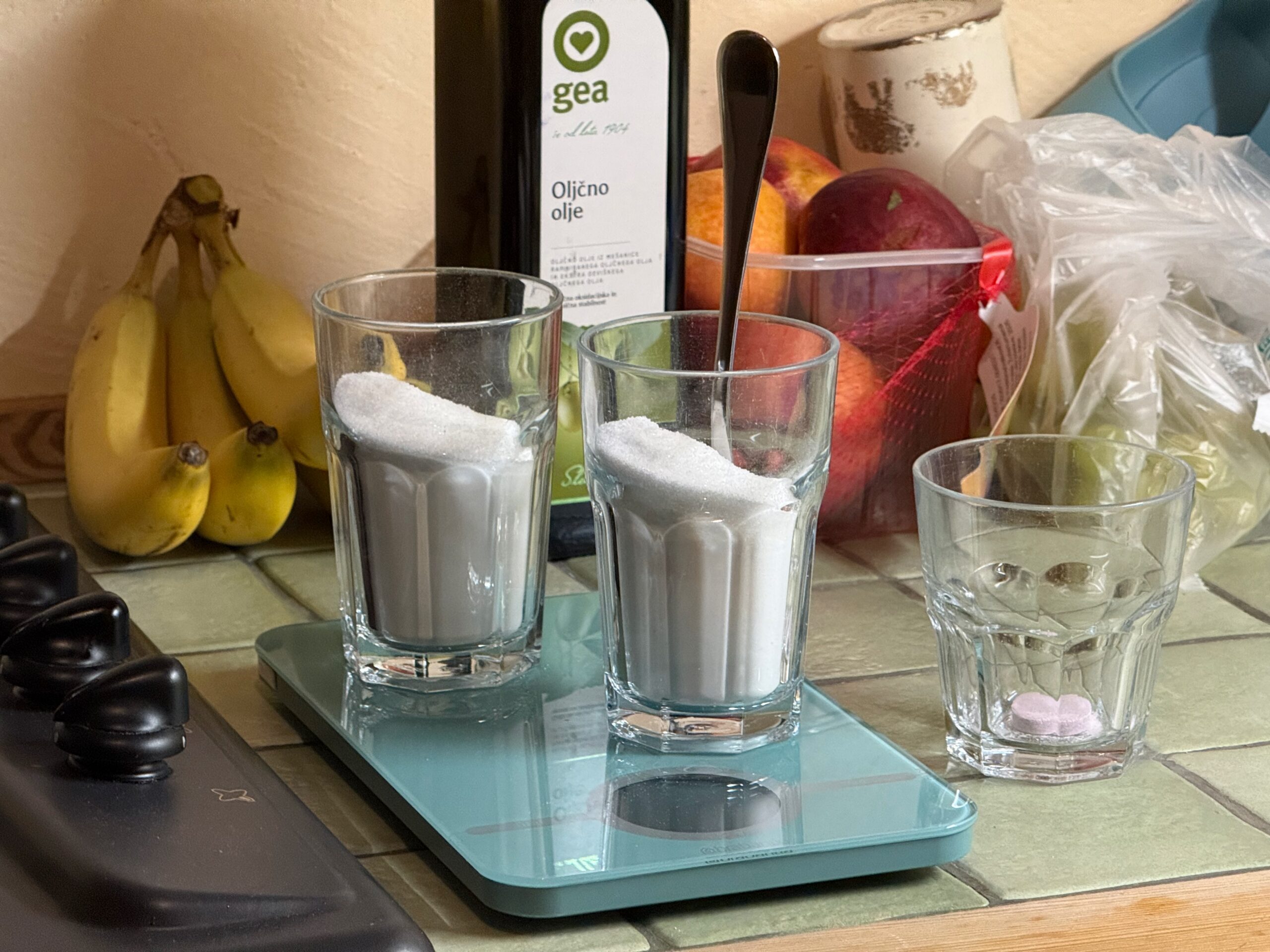
WOW! This is actually so incredibly cool! I look around and realise just how breathtakingly beautiful this place is. Rugged, inhospitable, dangerous. There’s absolutely no one here but me. No route markings. No trail. I scan the sky for clouds, but there are hardly any. It’s a fantastic day! Suddenly, I feel like shouting! HAAAAH YES! This is amazing! I quickly take a few more gulps of my drink mix, and as the sugary liquid surges through my veins, I decide that it’s actually very simple: up. I just need to keep going up.
Part 2 – Goals
I carefully continue climbing, trying to avoid the wet sections as much as possible. When I arrived in Slovenia the previous Thursday with my wife and our two little boys, the rain was pouring down. Friday was still wet too. It wasn’t until Saturday that the rain stopped, but I decided to give the rock another two days to dry out. Now, as I find myself here on The Wall on Monday, I’m glad I waited. For the most part, the rock is nice and dry, apart from a few wet patches here and there.
After just 4.5 hours of sleep, I’d got up at 3:15 that morning. I gathered my gear and set off just before 4 a.m. Once I was in the car, I realised I’d already ticked off one of the two essential requirements for making this adventure a success. Namely: leaving the holiday home without waking the kids. Because if my four-year-old son woke up, he’d probably wake up his little brother and my wife too, and keep them awake. That particular combination of sleep deprivation would personally see to it that, upon my return, I’d regret ever having left in the first place. Or I’d regret having come back. Although, actually, that last part was my second requirement for success: making it back in one piece, without too much physical damage.
Anyway, I was glad to be in the car. We’d come to Slovenia for a holiday, but at the end of the week, I was also going to run the Julian Alps Trail. That meant 54 kilometres of running through the Slovenian mountains, with at least 2,700 metres of elevation gain. I’d spent six months training for this trail. I smashed personal records and ran 132 kilometres in a single week during my Hell Week. Every day, I did strength training to prepare for the elevation changes, especially the descents. In my dreams, I became the Quadfather, effortlessly flying down the mountainside. In short, I was in the best physical and mental shape of my life. Climbing Triglav, Slovenia’s highest mountain, was part of my plan to acclimatise. From a fitness perspective, at least, this solo climb via the Slovenian Route shouldn’t be a problem.
Part 3 – The Route
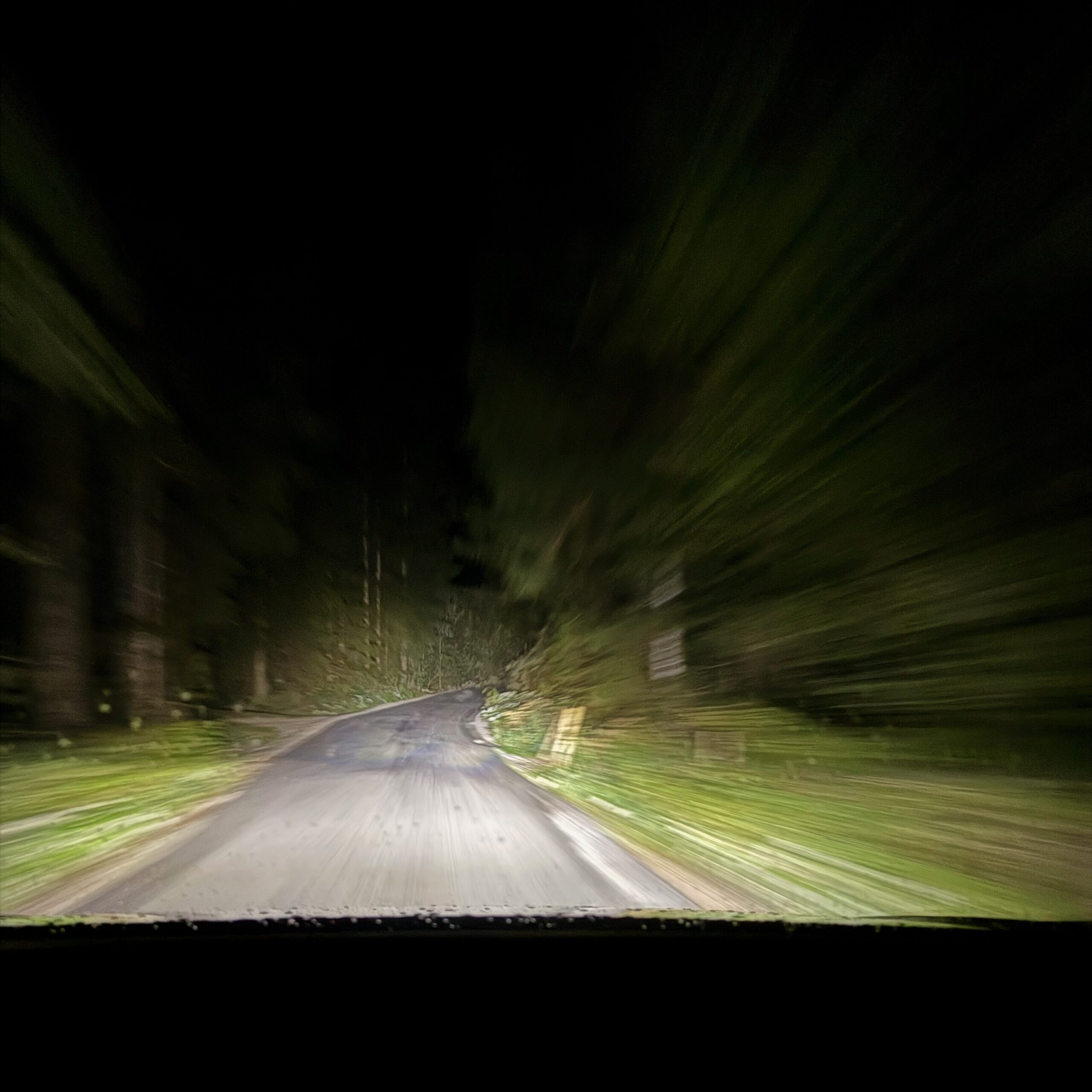
In pitch darkness, I drove from Kranjska Gora to the start of the route in the Vrata Valley. Along the way, I had to rely on my reflexes to avoid an enormous dead animal lying in the road. With a sharp turn of the steering wheel, I swerved around it. Its entrails were scattered everywhere, so I couldn’t really tell what kind of animal it was. Further along, the digital signs told me there were still 98 parking spaces available in the valley. More than enough, but I was surprised that there were apparently already almost 100 cars there on a Monday morning, given the total capacity of 195 spaces. Would it be busy around Triglav?
After parking and setting off, I reminded myself once again to take it easy at the start. It was now 4:28 a.m. First light was expected at 6:10, with sunrise at 6:41. Since the approach to the start of the Slovenian Route was supposed to take 1.5 hours according to the topo, the timing would be ideal. Hopefully, no other climbers would have started ahead of me by then. That would reduce the risk of rockfall. For me, at least. And I’d definitely prefer to tackle the serious part of the route in daylight.
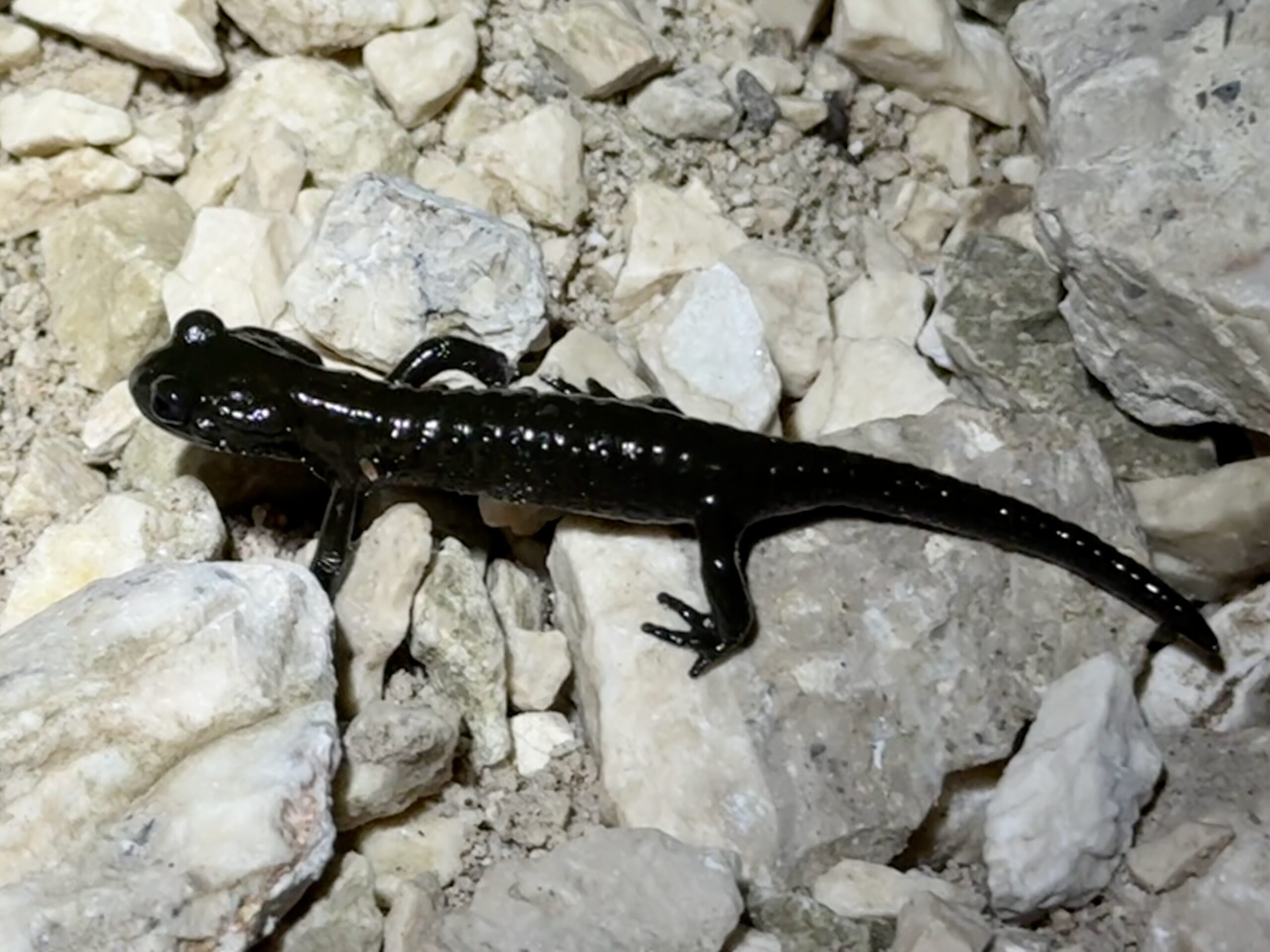
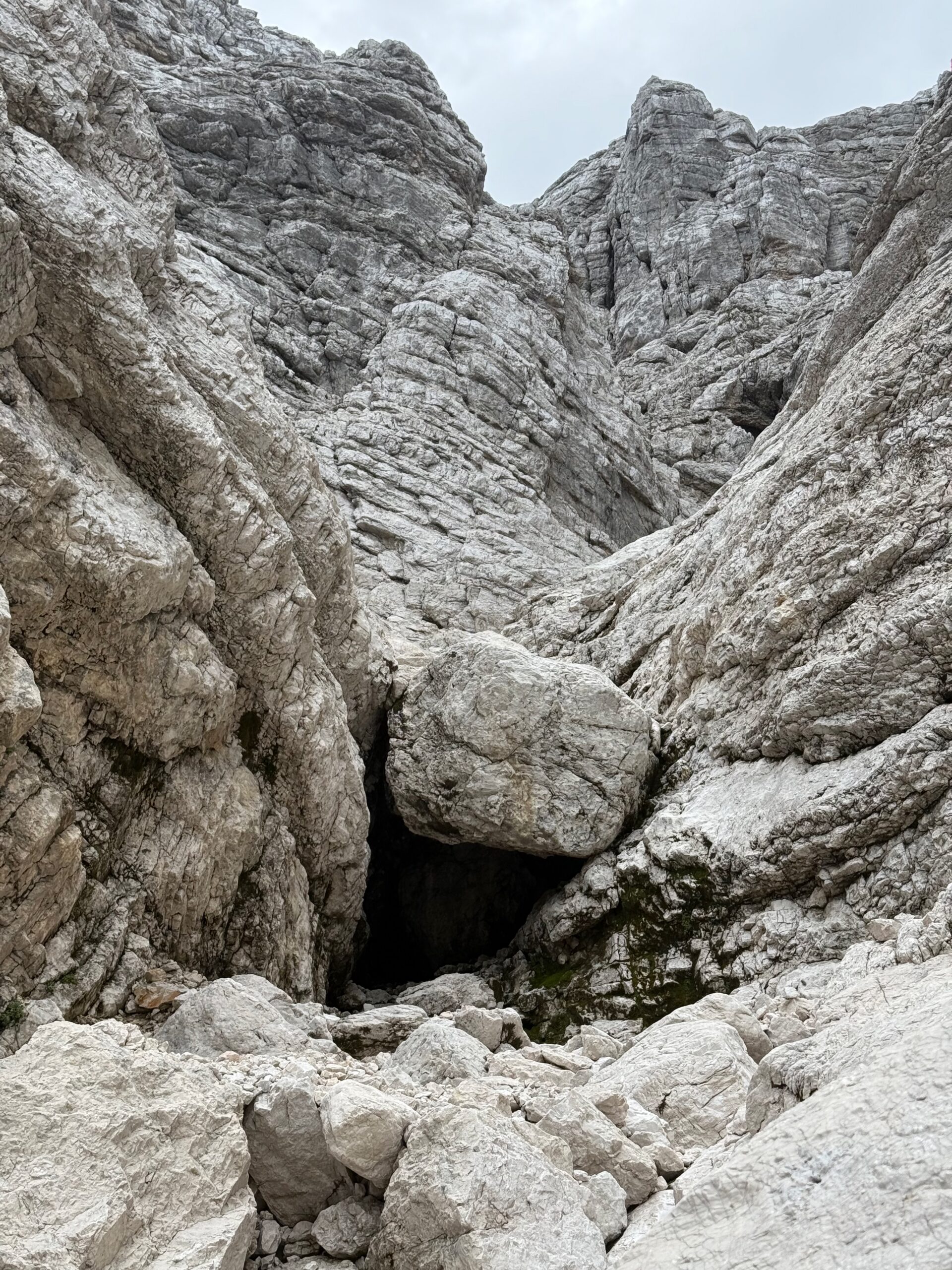
The first section of the approach took me alongside the river. After about 40 minutes, I crossed it diagonally to the left and continued on my way, following the GPX track on my watch. I followed small trails uphill, and before long the terrain turned into a steep couloir (a gully) filled with enormous boulders. Much bigger than cars. Something didn’t feel right. I’d only been going for 50 minutes. I hadn’t been walking particularly fast, so this couldn’t possibly be the start of the route already. And this was definitely no longer a trail, but proper scrambling. On closer inspection, it turned out that the maps on my watch were zoomed too far out, making me think I was on the route when I was actually off course. Just before the holiday, I’d received a replacement Garmin Fenix 8 under warranty because of faulty buttons. Apparently, I hadn’t set the map zoom correctly yet. I soon managed to get back onto the official approach trail, but this little episode would set the tone for the rest of the day. Searching, looking, left, right, up, down, backtracking again, more searching.
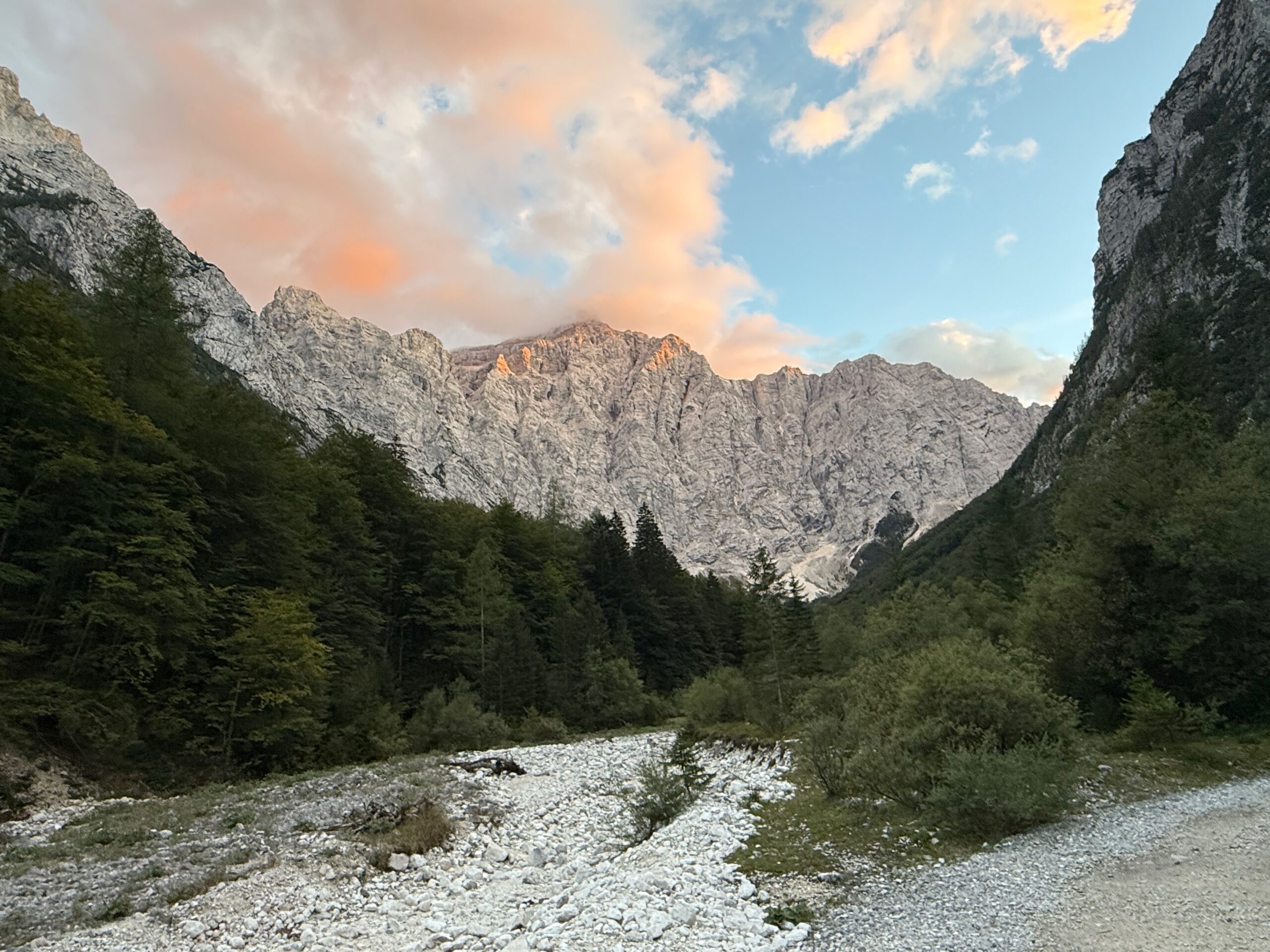
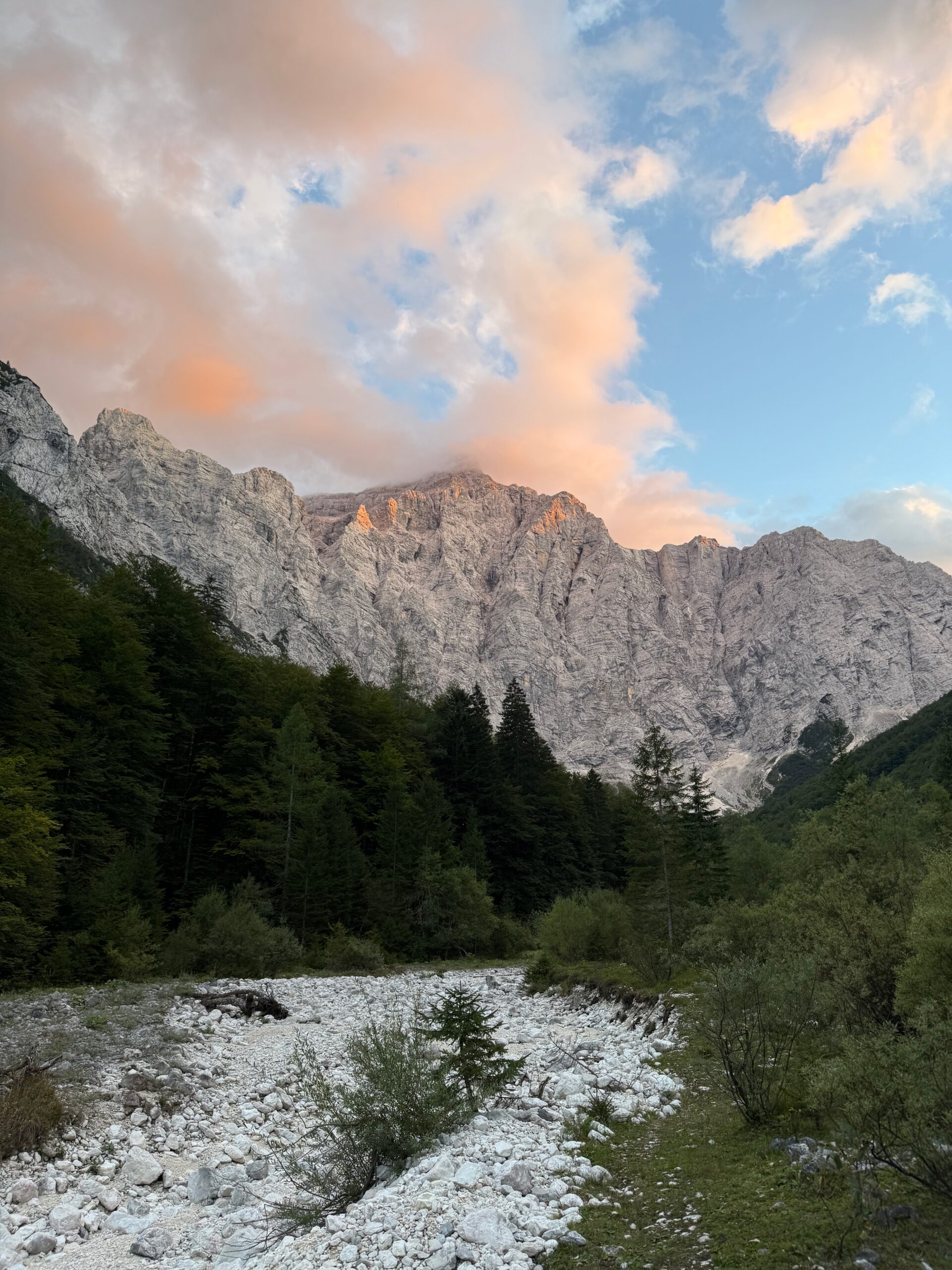
After an hour and 35 minutes, I reached the start of the route. Despite my earlier wrong turn, I was still more or less on schedule. When I switched off my headlamp for a moment, I realised I could already see more than I’d expected. Very slowly, the sky was beginning to lighten. The north face of Triglav gradually came into view, rising like an enormous wall of rock. One kilometre high and four kilometres wide. Impressive! Full of energy, I started the actual route: the Slovenska smer. In other words: the Slovenian Route. A classic alpine route with many variations. Loosely translated, that means: you’re in the mountains, there are some vague ideas about where the route goes, and it’s up to you to decide what you dare to tackle. No trail. No markings. No protection. No aid stations serving cola, crisps and massages along the way. Just rock and that beckoning summit.
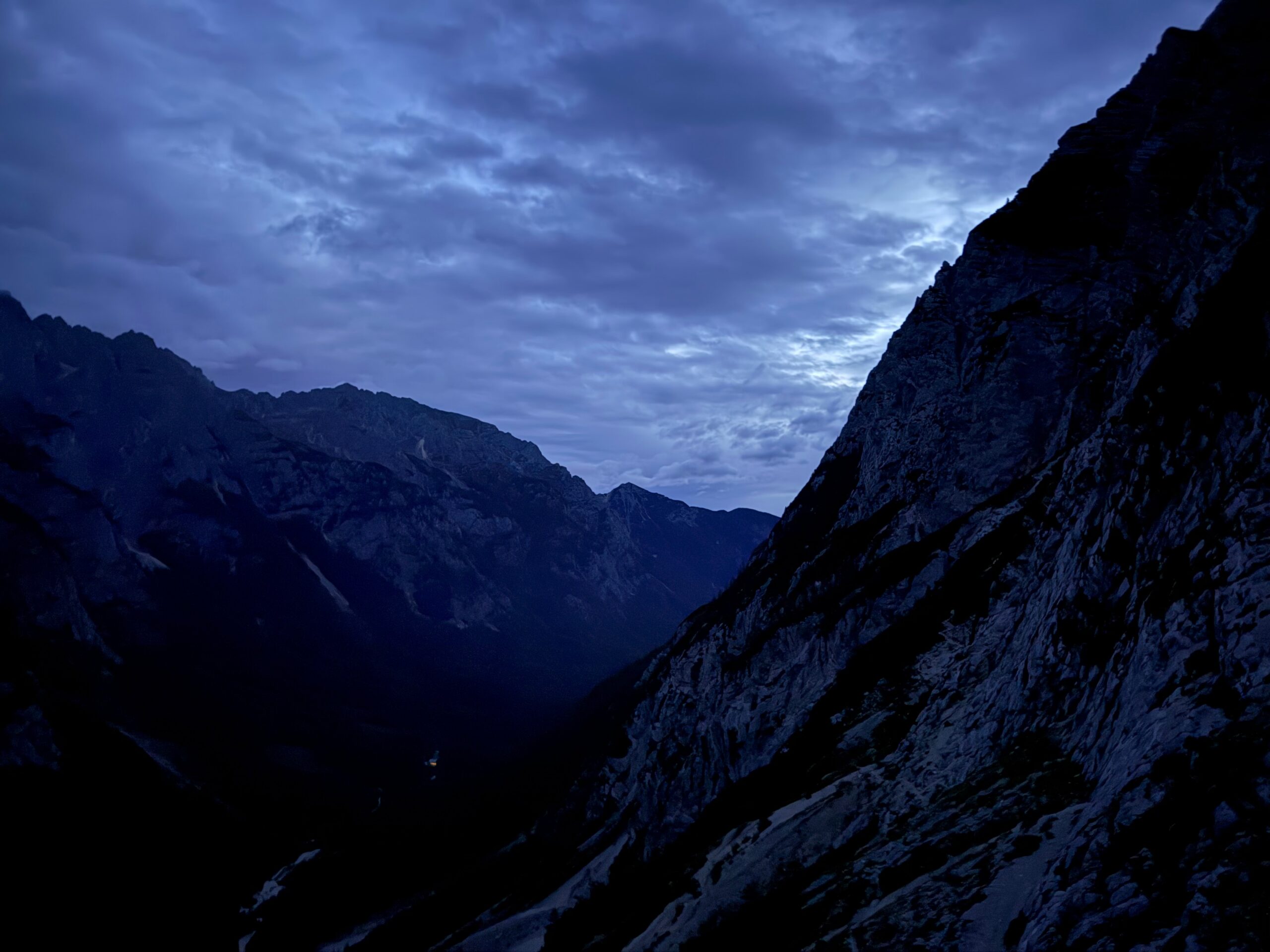
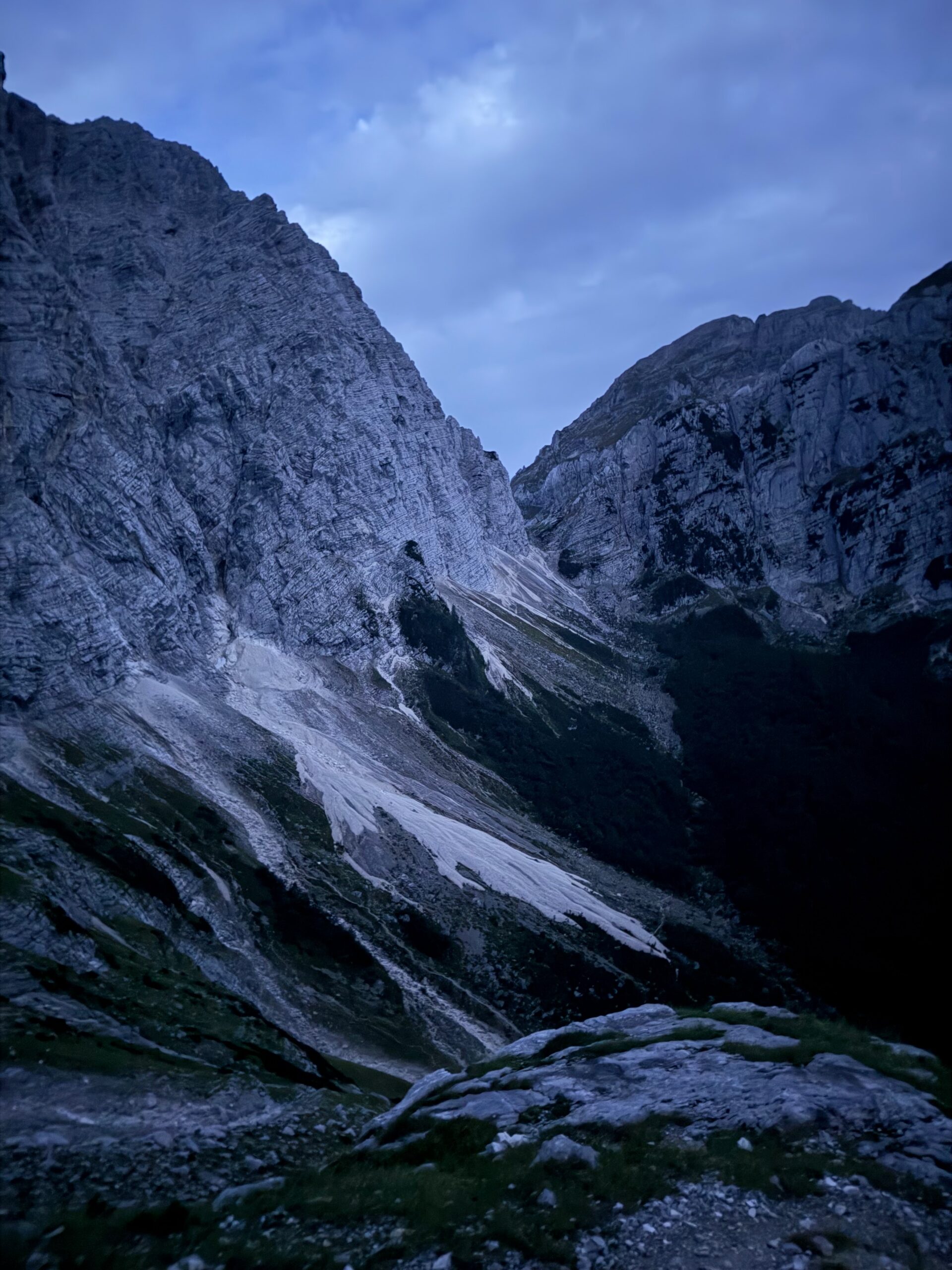
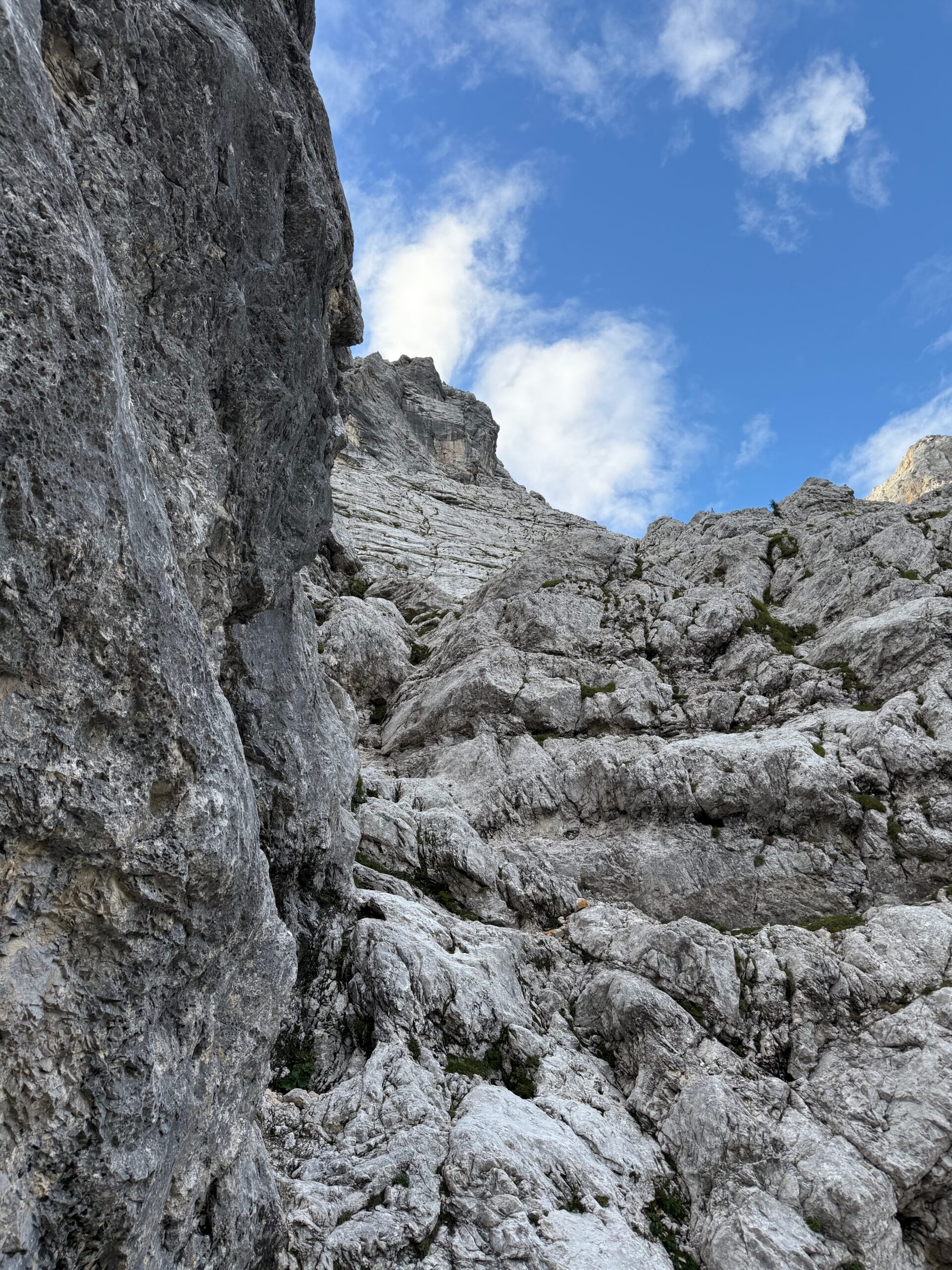
But I’d barely started before the doubts crept in again: was this really where I was supposed to go? I’d planned to climb the first section “via the larches”, as the topo described it. But within no time, I found myself above a sheer drop, balancing on tiny ledges and fighting my way through small bushes. Was this what the topo meant by larches? Bushes? Aren’t larches supposed to be trees? Surely this couldn’t be right? What climbing grade would this even be? In alpine terrain, that’s always an impossible question to answer, because it depends enormously on two things: 1) the beta, meaning the exact line of the route (a metre to the left or right can make a huge difference), and 2) the conditions (wet rock, mud, snow). Besides these objective factors, there’s also the way it feels. Climb an easy route above a sheer drop, and suddenly it feels incredibly difficult. “But no,” I thought, “the topo rated this section grade I/II, so even in these conditions it absolutely shouldn’t feel this hard.” And I wasn’t the first person ever to climb this route, so should there really be this much grass and so many bushes growing here? Once again, I trusted my instincts and turned back.
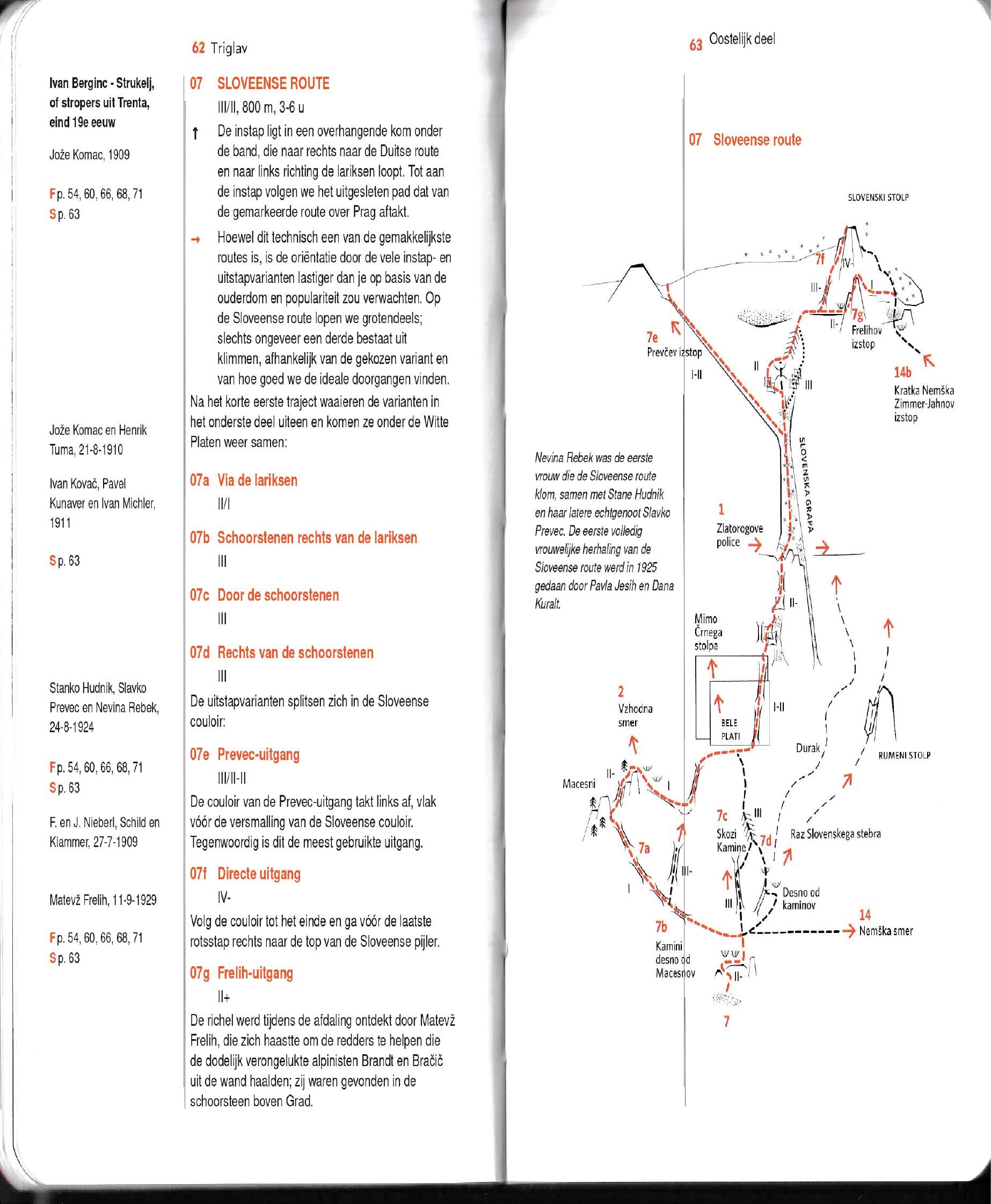
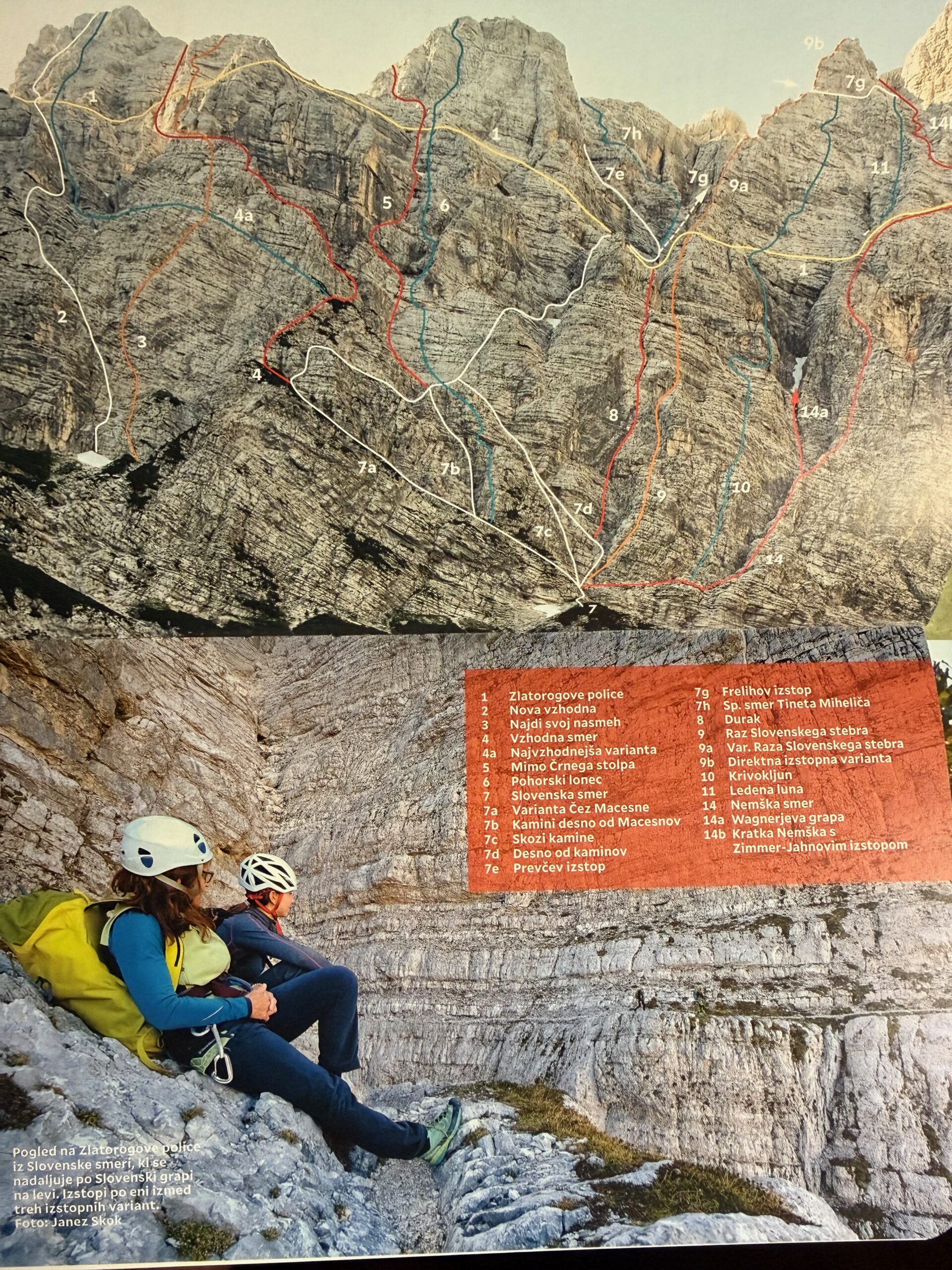
But no matter how hard I searched, I couldn’t find a clear line to follow. And constantly climbing myself into dead ends didn’t seem like a particularly good idea either. So I kept searching, searching, searching. Without my drone, I wouldn’t have managed to find the route. The change in perspective is incredible. Close up, a little further away. Up, down. A section can look completely different from below than it does when viewed from ten metres higher up. After spending quite some time flying the drone and carefully comparing what I saw with my topo, I could finally get moving. Upwards. Yes! That felt right. And indeed, once I was on the correct route, the climbing was perfectly manageable.
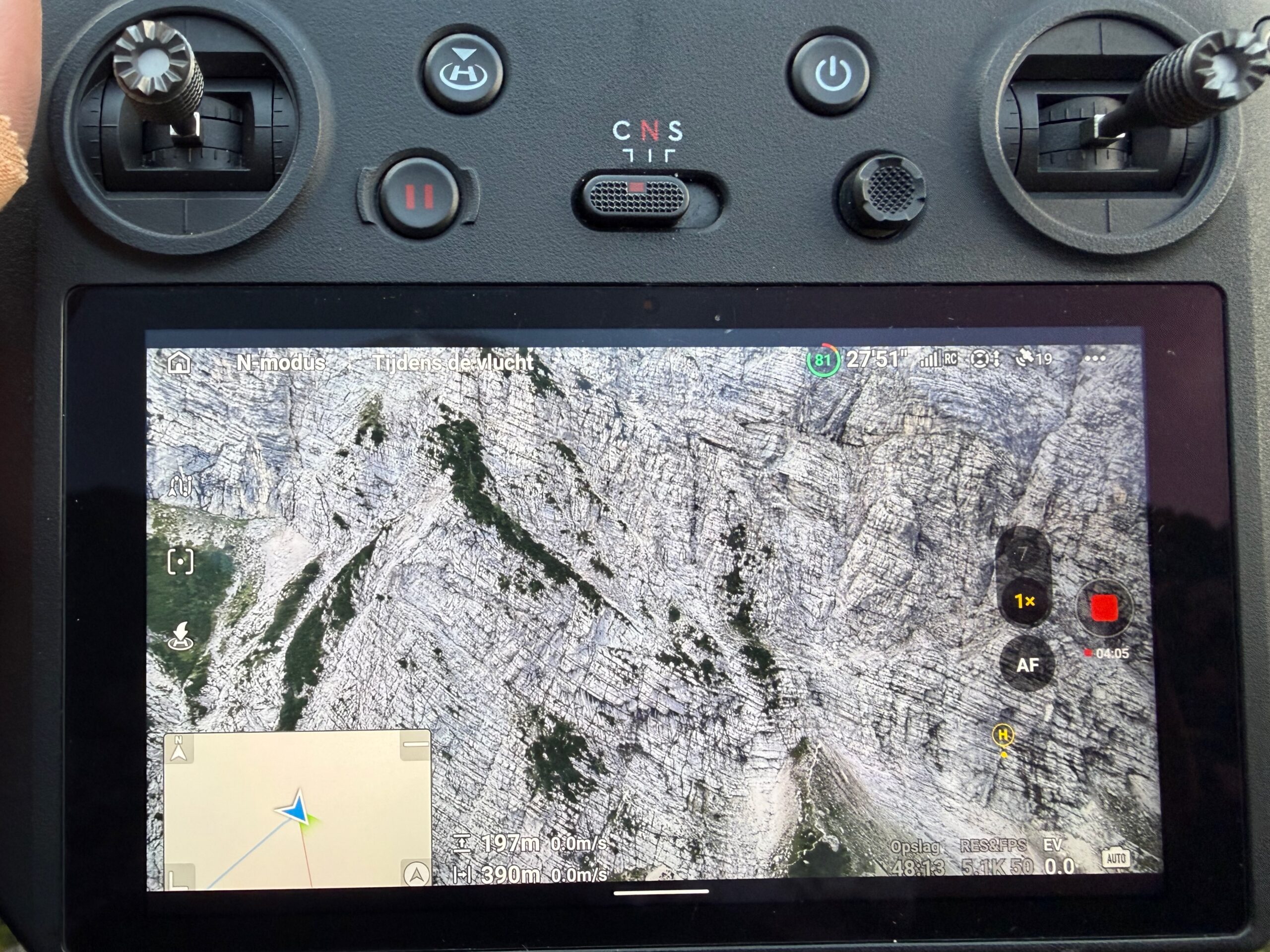
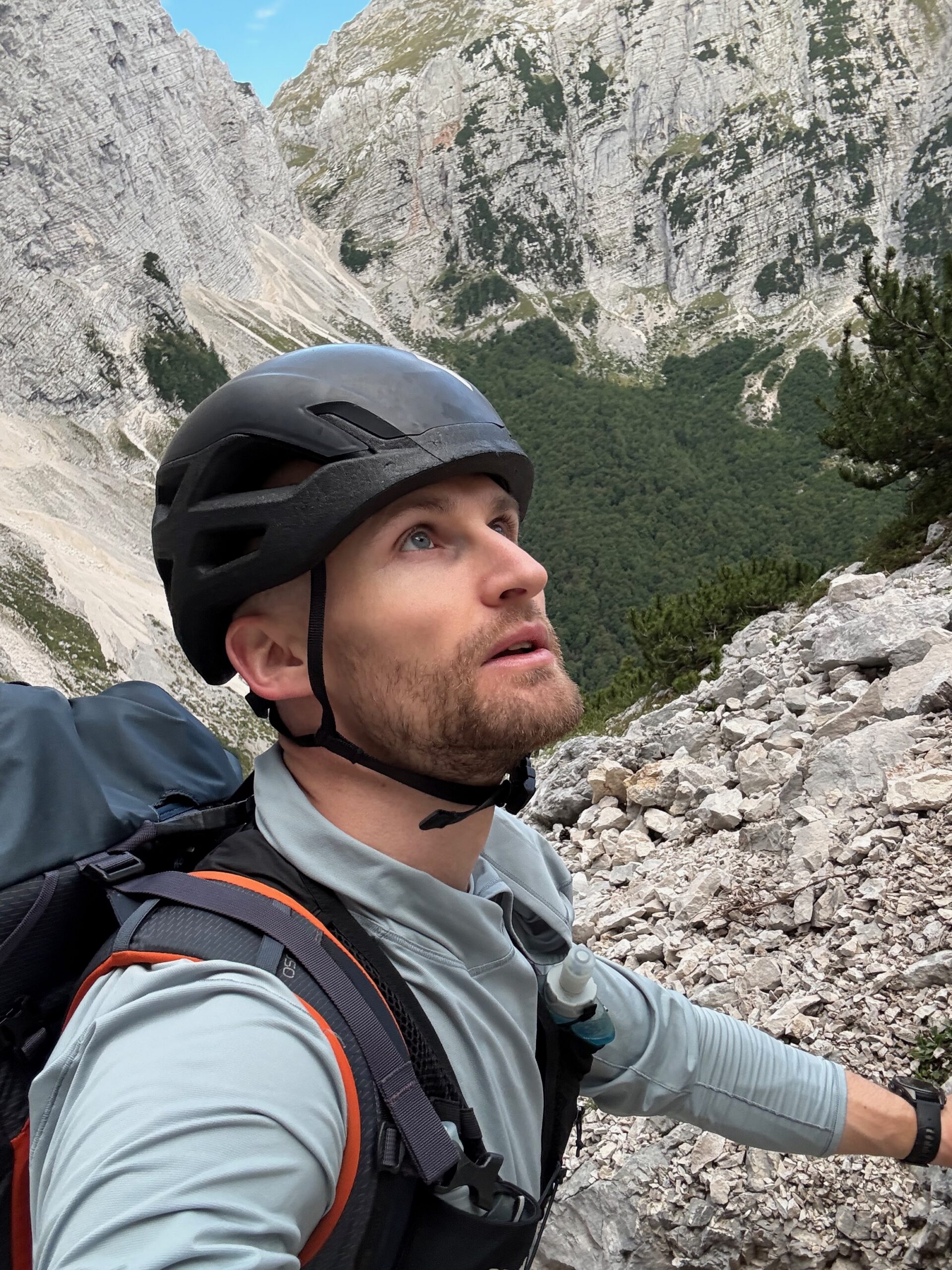
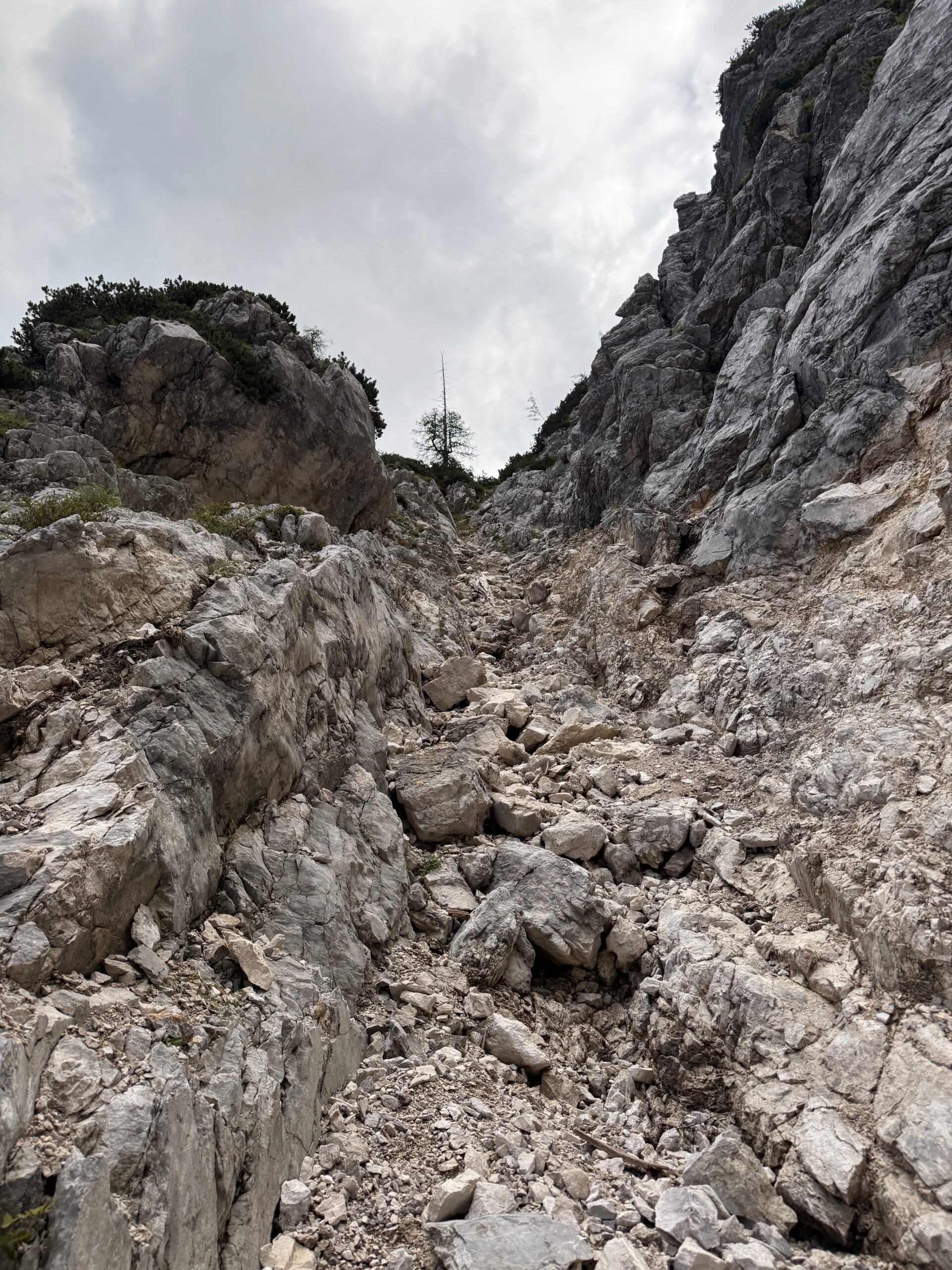
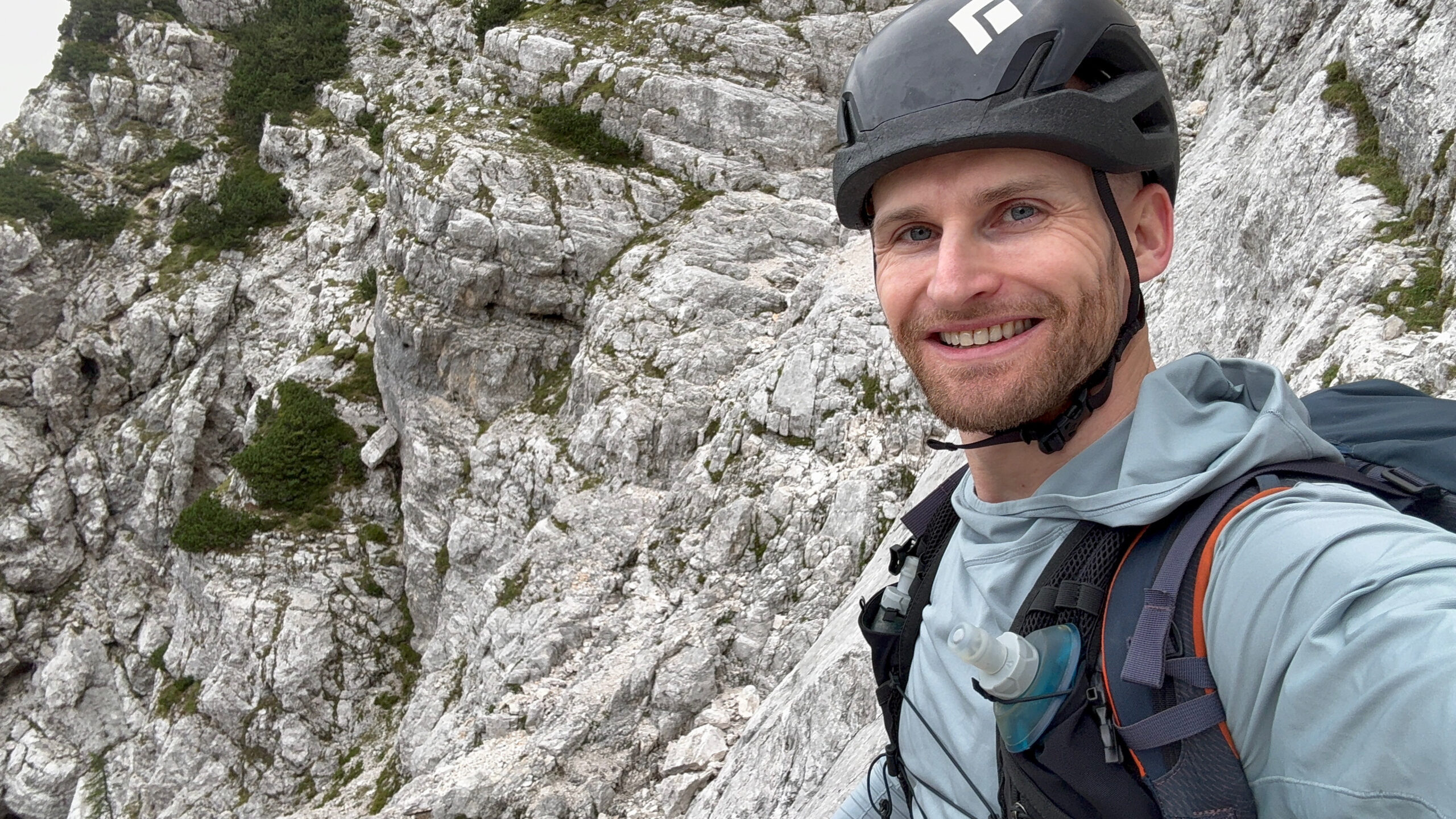
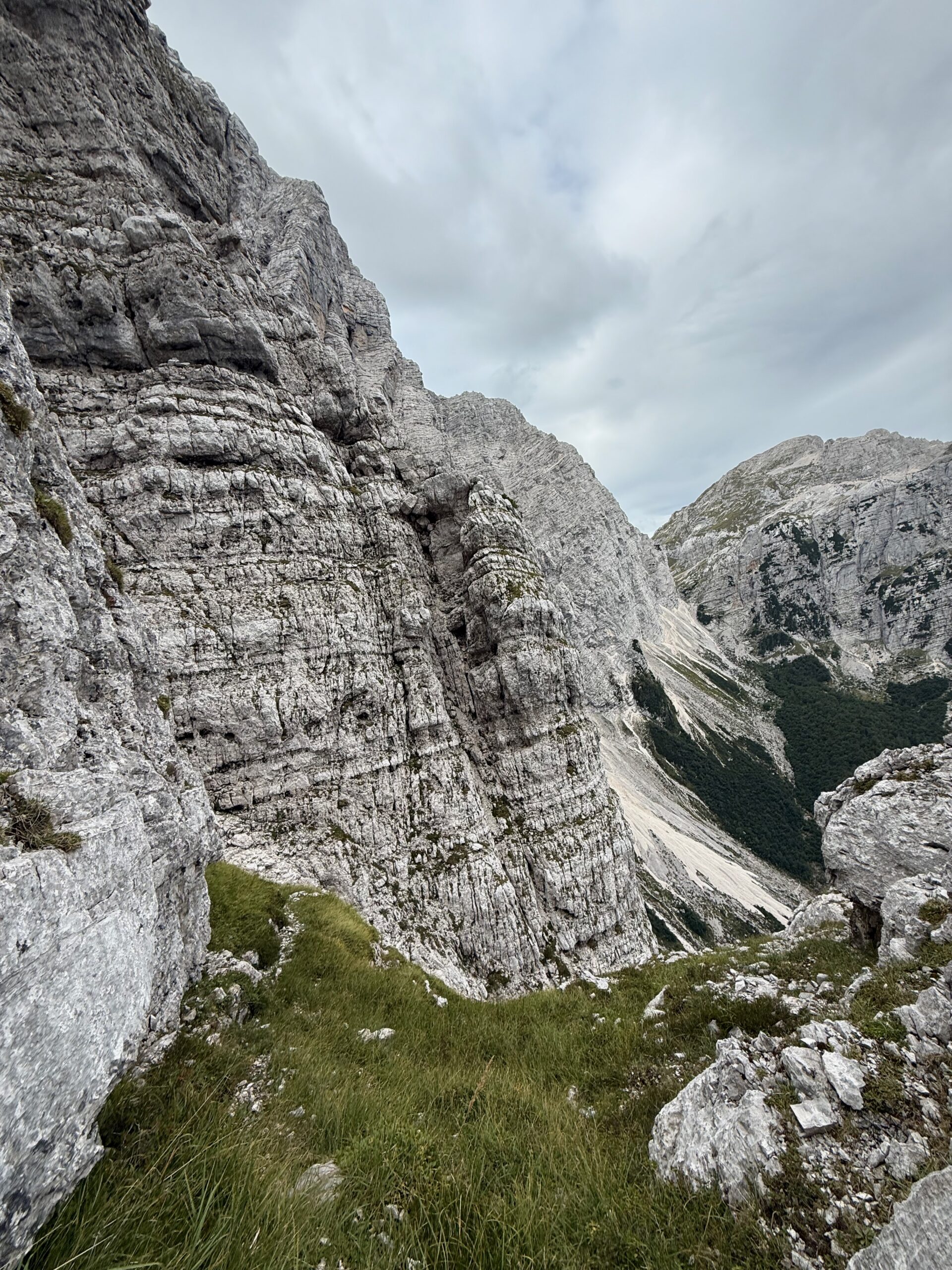
Over the next few hours, this pattern kept repeating itself. Searching. Climbing. Searching. Twice more, I used my drone to study the route higher up. As soon as the drone was back in the air, for example, I immediately spotted an unmistakable landmark: the Bele plati, or White Slabs. Compared with the jagged nature of the surrounding rock, this is an exceptionally flat section of rock. At 9:50 a.m., I could feel some serious blisters starting to develop. Normally, I wouldn’t have stopped for something like this, but with the running event in mind, I decided to take a little time to deal with them. I took off my shoes and saw that my socks were completely soaked. Oops, my shoes were too warm. I created a veritable work of art with sports tape around both heels, put my shoes back on and continued on my way.

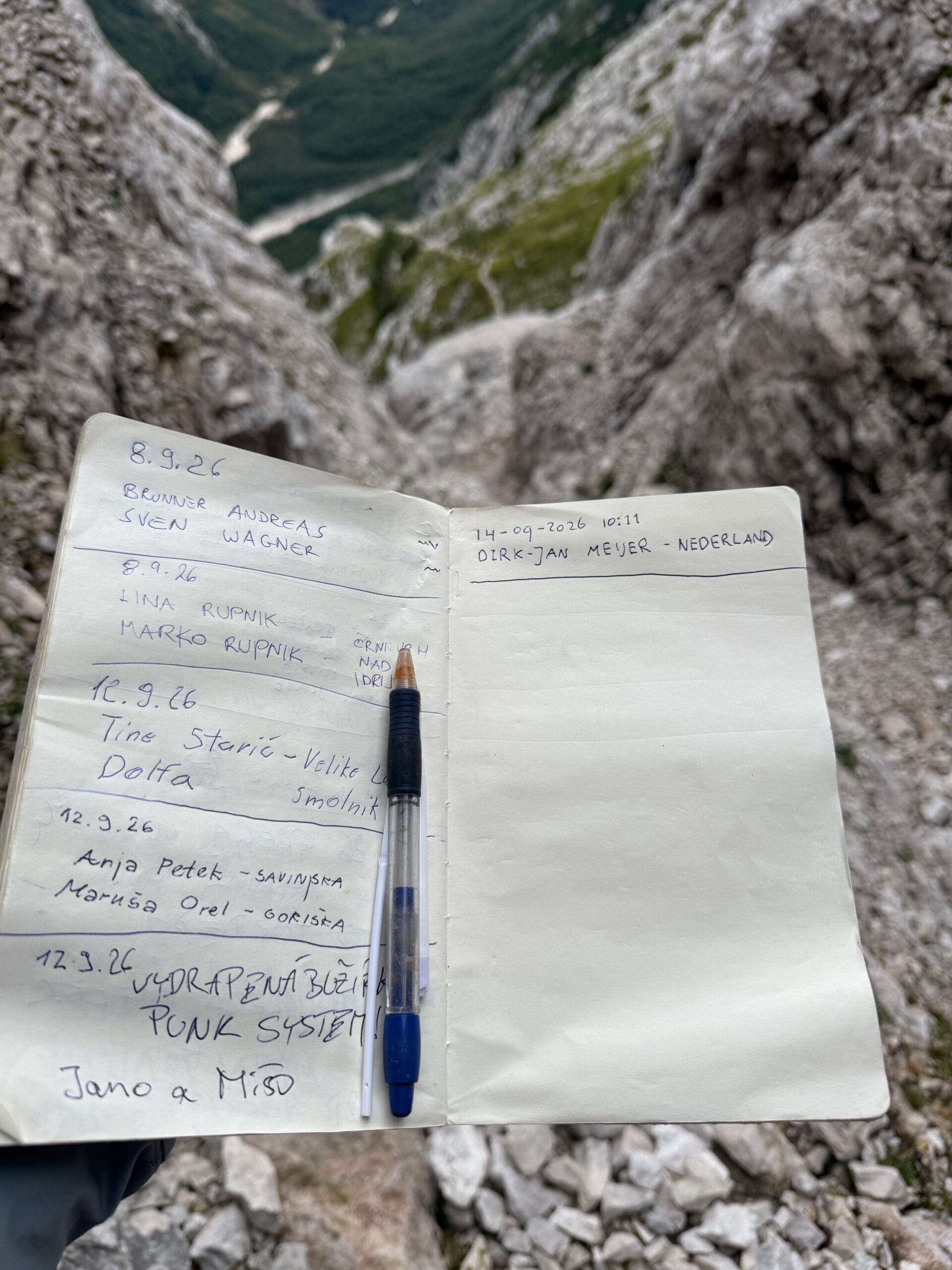
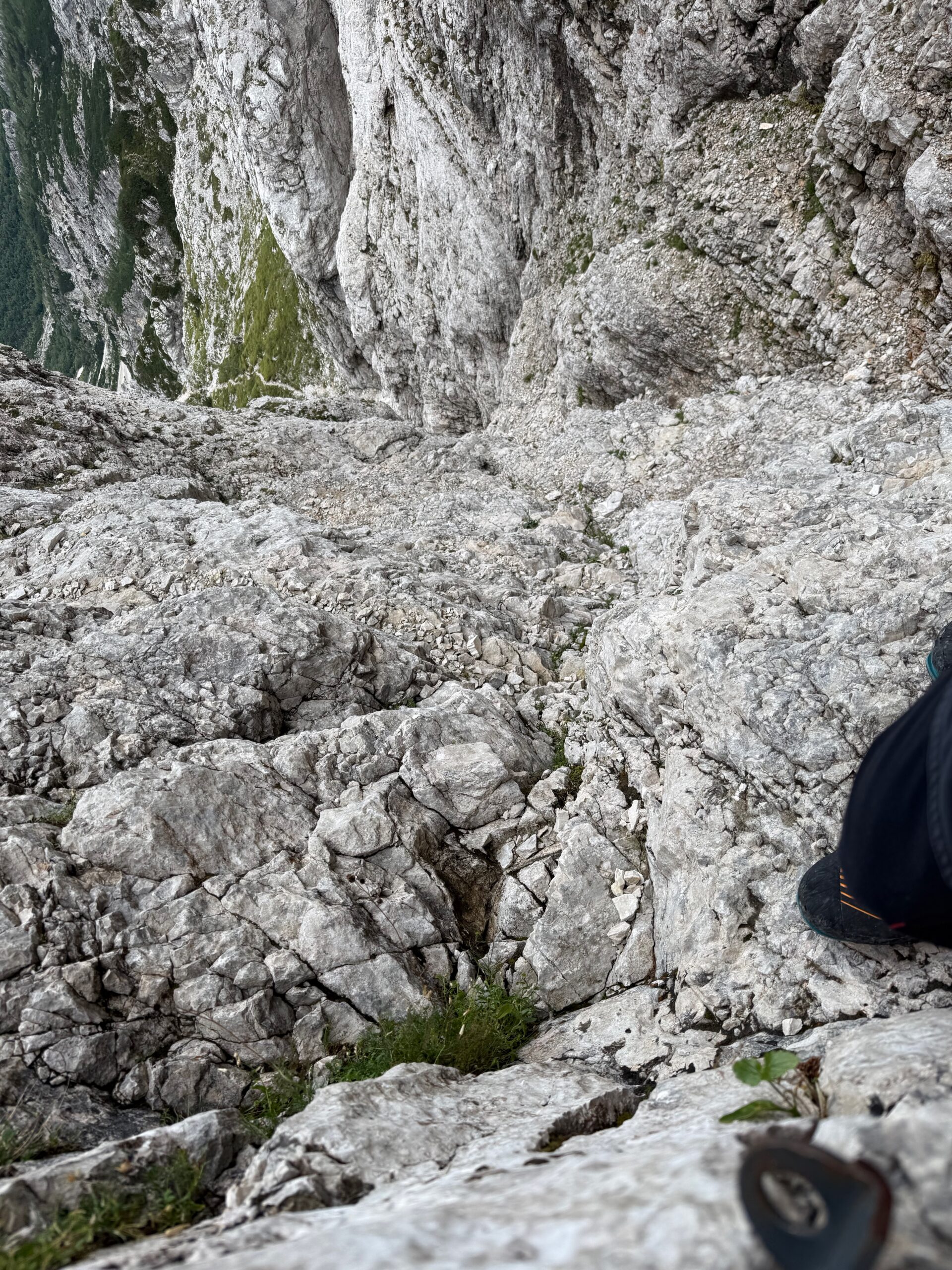
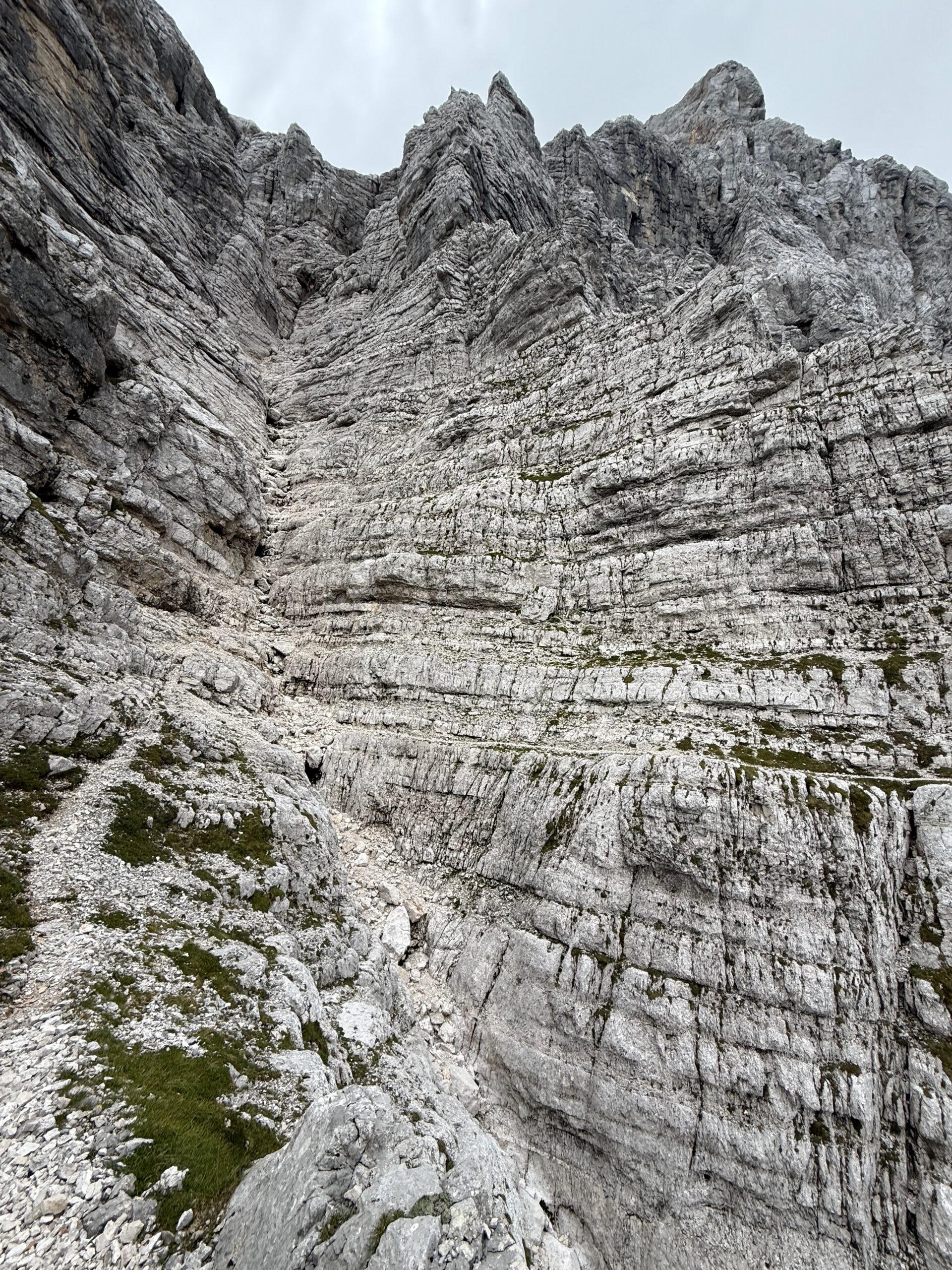
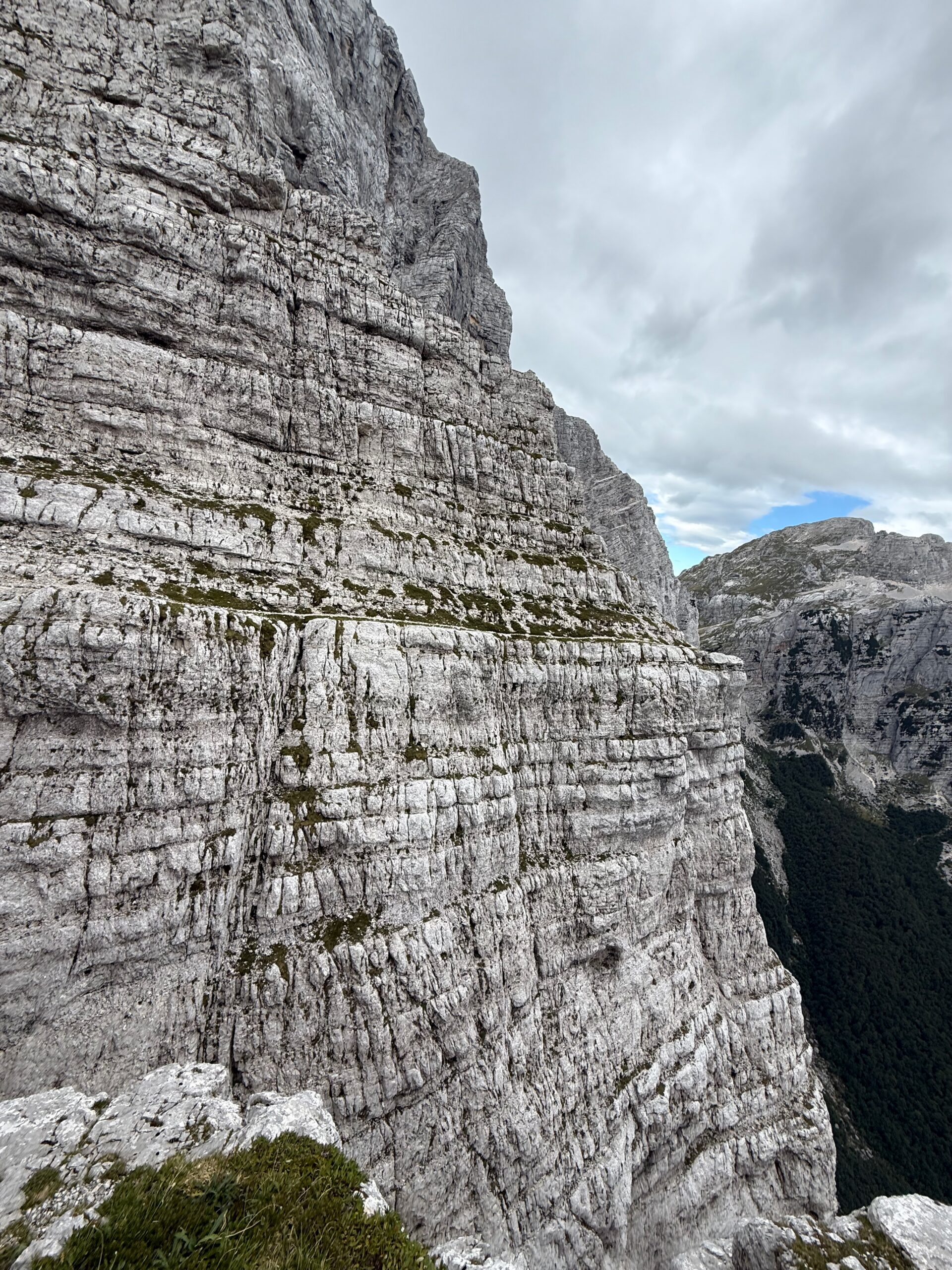


Part 4 – Guardian Angels
Knock, knock. Once again, I tap the rock I’m holding on to. No, that doesn’t sound good. Better find something else. Sometimes, this mountain range seems like one giant apple crumble pie. So much of what you touch shifts, moves or breaks. The Slovenska grapa is now well below me. I grab another small edge. Perfect. Now to move my feet. I shift my weight onto my left leg and start lifting my right foot to place it higher up. CRACK! The foothold beneath my left shoe breaks off! Am I keeping my balance? Check. Okay, no harm done. Onwards.
A few moves further on, the terrain gets steeper. Good handholds are becoming increasingly scarce. I move by the book: three points of contact, moving only one of my four limbs at a time. Right hand. Left hand. Foot. Other foot. Always in control. This is not the time to practise your dynos and leap from rock to rock like a mountain goat.
Now I reach a section where there’s only one place to put my fingers, on a slab of rock. Wait, is that loose? Forget it! I’ll find something else. Crap! There really is nothing else. Carefully, I put some weight on the slab, making sure not to pull on it but to apply downward pressure in the direction of gravity. And then, suddenly, the entire slab, along with a huge chunk of rock, slides straight down! I’d barely applied any force. That whole section had needed almost nothing to come loose. I manage to twist my leg out of the way just in time to avoid having my foot crushed. The rock slides and bounces down the face below me, smashing into pieces as it goes. I’m glad there are no climbers beneath me.
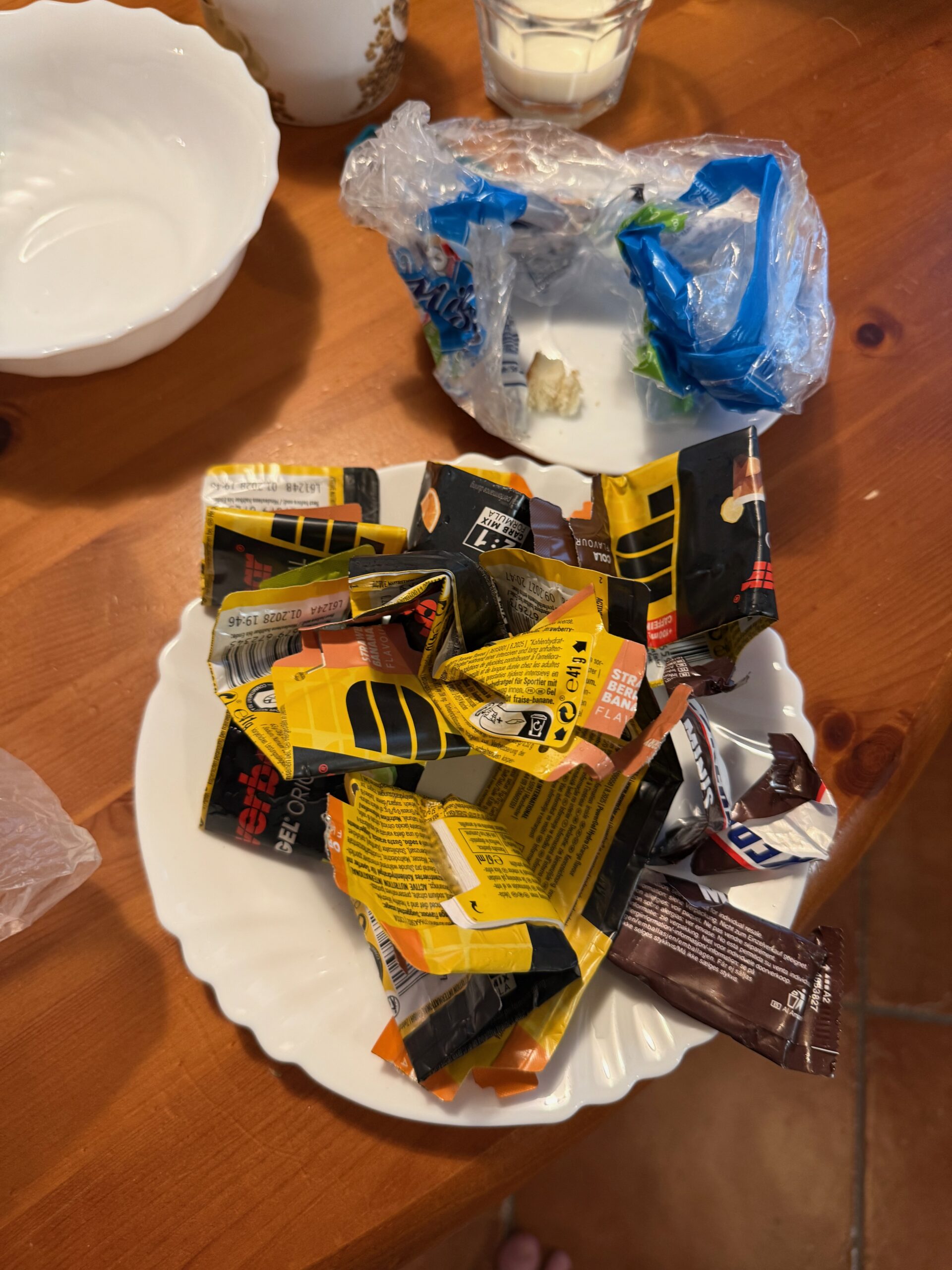
I look around to assess my options. Am I really on the right route here? I’ll move a little further to the left. That looks better. First, I have an energy gel and let my heart rate settle down a bit. No adrenaline here, just focus and control. As I continue climbing, for a while, absolutely nothing else exists except my hands and feet on the rock. Total concentration on the next move. A rare state in which I no longer know whether I’m hot or cold, what time it is, or how my wife and kids might be doing. There is nothing but the here and now. Hyperfocus. I love it!
Does this still fall within the easy climbing grade this route is supposed to have? I’m actually doing some pretty technical climbing here. Doesn’t matter, I tell myself. It’s within my abilities. This is why you’re here, right? To climb! I reach out with my right hand towards a small hold. It’s sharp and cuts into my fingertips. No problem, it offers good grip. I reposition my feet and pull hard on the rock to move upwards. Then, with a sharp crack, the hold breaks off! Instinctively, I fight to keep my balance. My backpack pulls me backwards into a twisting motion. My left shoe scrapes against the rock, and with my left hand I pull myself as close to the face as possible. That was close!
My heart rate shoots up. I’m not comfortable where I’m standing. I can’t relax. But where can I go? Not up. Left? No. Right isn’t an option either. Downclimbing it is, then. Suddenly, I realise this is going to be tricky. Climbing up is one thing. Climbing down is quite another. There’s no other choice. I say a quick prayer. Maybe it’ll help. I could certainly use all the help I can get right now. What on earth am I doing here? I’m scared, but I hate weakness. Come on! Focus! Carefully, with absolute concentration, I climb about ten metres back down. It feels like an eternity. There, I can find a better stance and finally calm down a little. Then I laugh to myself: this is absolutely insane! What an adventure!
A glance at my phone tells me I still have no signal, and that it’s now much later than I’d planned. I’d actually hoped to be standing on the summit of Triglav around lunchtime. I’d already made peace with the fact that I wasn’t going to reach the summit today, hours ago. Too much time lost searching for the route. But I’d still thought it might be possible to finish the Slovenian Route and descend via the easier Prag Route. But now? What are my options? I don’t think it’s responsible to continue climbing solo through this kind of rock. Maybe I’ve already used up all my luck for today: the rock quality has been highly variable all day, and now pieces of rock have broken off three times in the space of five minutes. Fortune favours the bold, they say, but the line between bravery and madness is getting dangerously thin.
So, down it is. That’s the only option. But it’s not a great one. I look down and marvel at the fact that I managed to climb up through this terrain in the first place. Crazy! Descending is going to be so much harder than climbing up. And where am I supposed to go? To be honest, I haven’t got the faintest idea exactly where I came from either. With all the searching for the route, I feel like I’ve been on just about every ledge and passage I can see. But which one is the right way back? My drone’s battery is dead, so that’s no use. My phone has no signal. I’m really frustrated that I can’t even let my wife know that I’ll be later than planned and that I’m okay. The thought crosses my mind that I might not manage the descent and could end up spending an unplanned night up here. I’d survive that, but I don’t want my family back home to start worrying or calling the police. Being picked up by a helicopter would be pretty cool, but it goes completely against my sense of pride. Following the example of mountaineering legend Gerhard Wegmaier, I’d rather crawl down the mountain. Besides, I haven’t even broken my legs!
Part 5 – Getting Off the Mountain
If only I could find those pitons again, maybe I could abseil down. Where the hell are those things!? I look down, searching for the route, for pitons, for recognisable landmarks. Why does this have to be so difficult? On the way up, I’d seen several pitons and bits of rope. Maybe I could use those. Could they be trusted? Would I end up plummeting down the mountain, rope and all, halfway through an abseil? No idea. But the thought of downclimbing the entire route doesn’t exactly fill me with enthusiasm either.
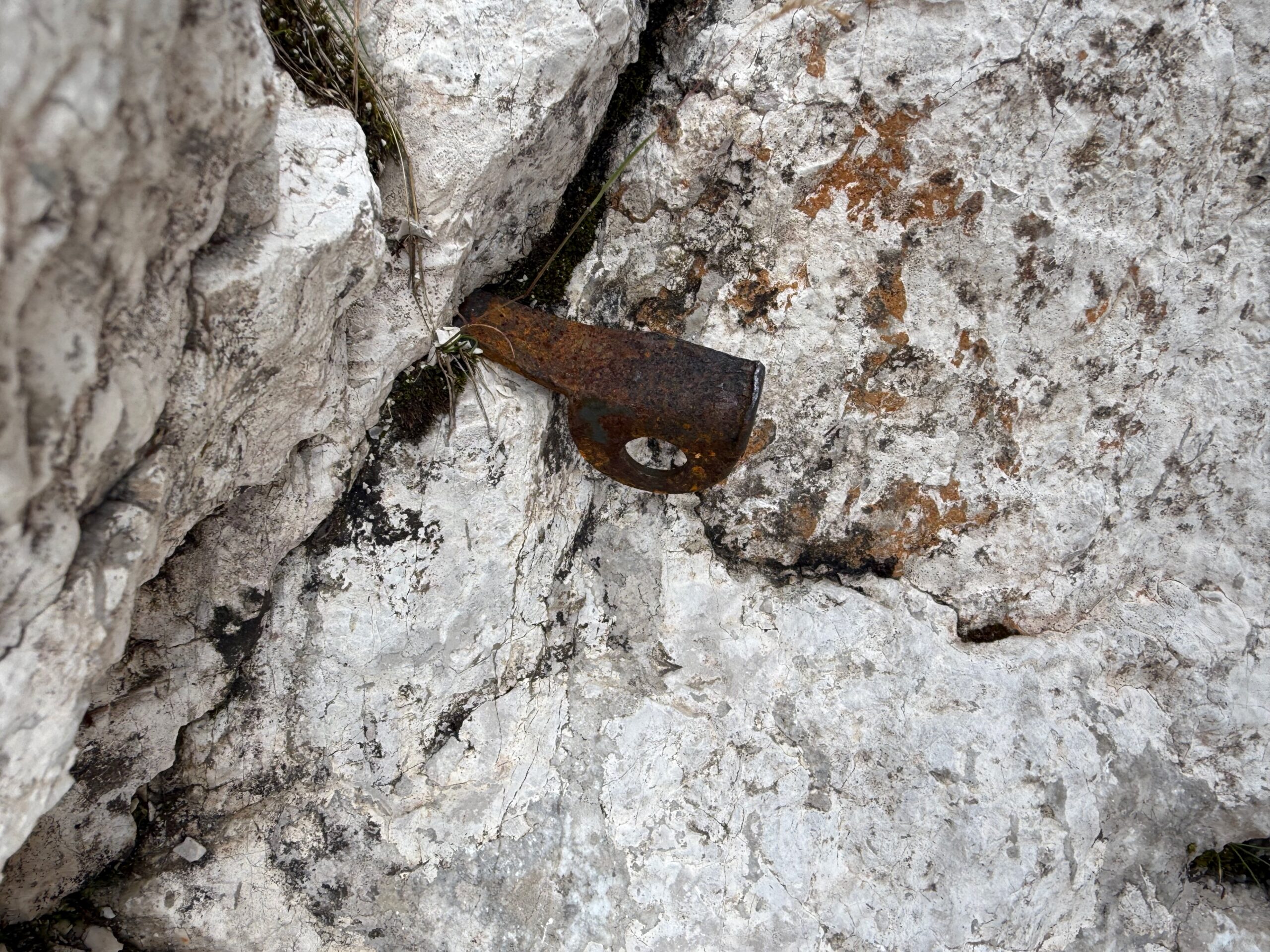
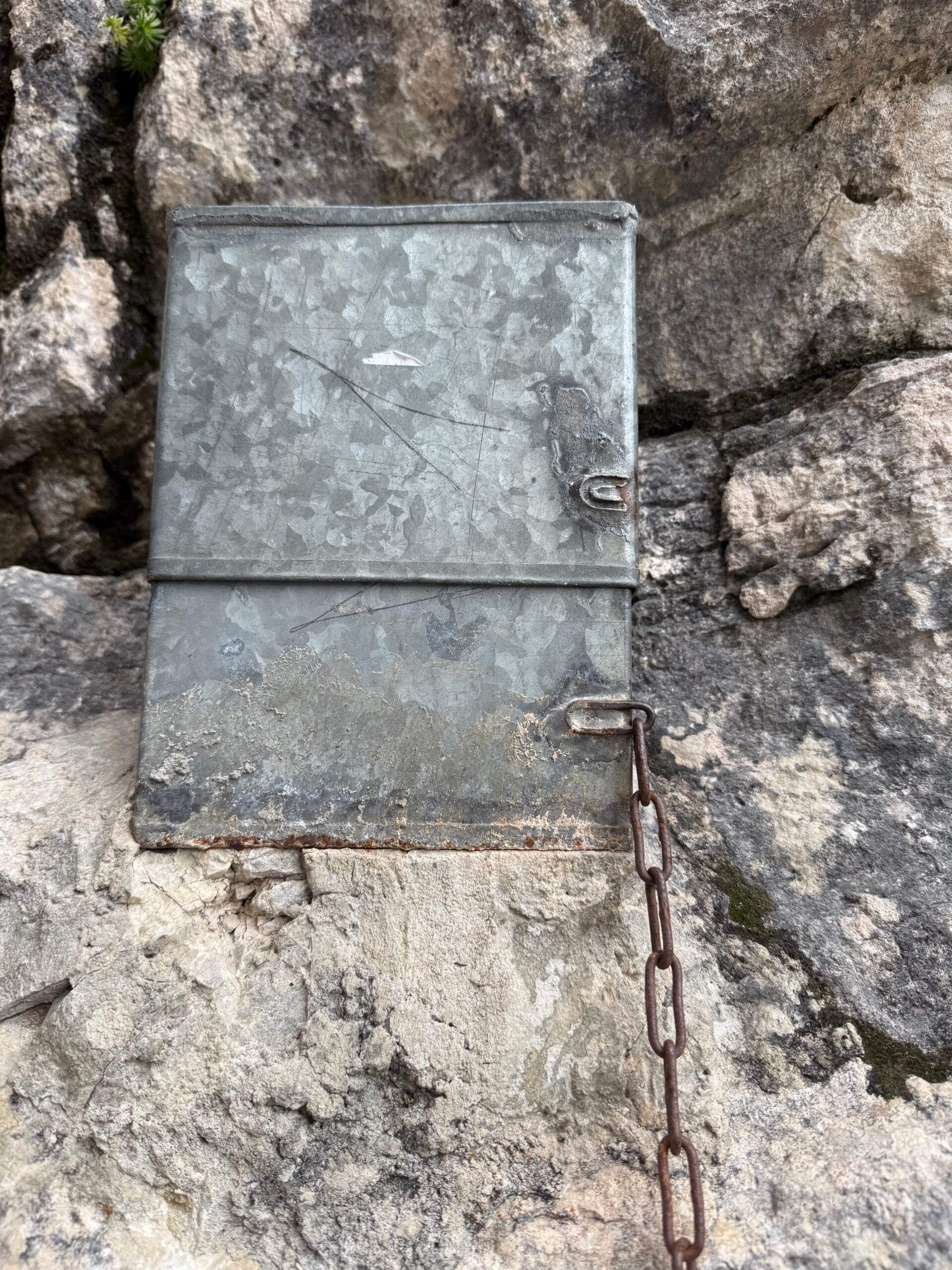
YES! There! I see one! Finally, a piton. What an incredibly beautiful piton. A little rusty, but who cares? It adds character. This one must have served plenty of other climbers well over the years. And past performance, well, at the very least it gives some hope of good results in the future. I take my 40-metre rope out of my backpack and tie in. Hmm, the piton seems to move a little. I slowly put my weight on it and give it a tiny bounce. The piton holds. Great! Let’s go.
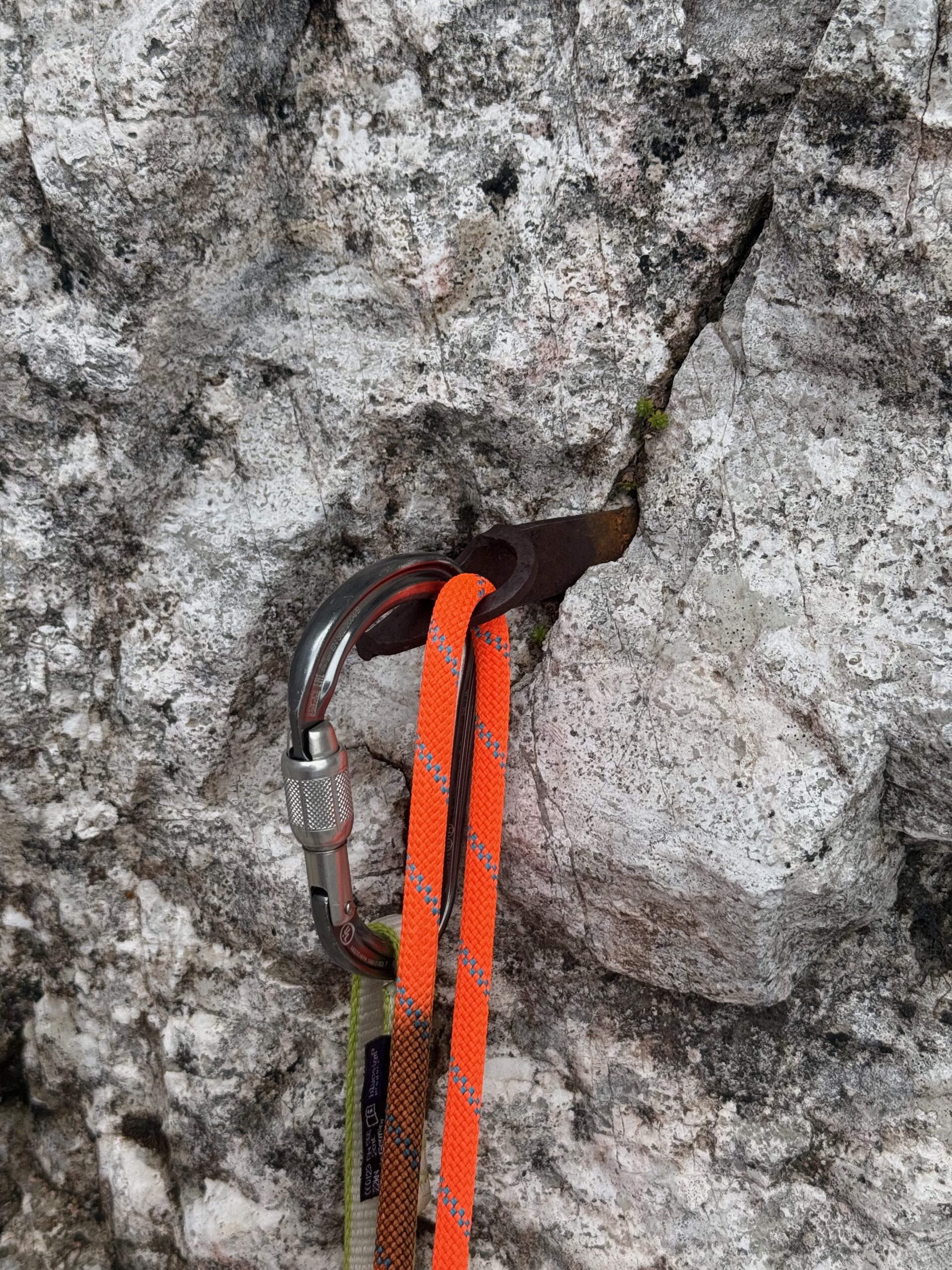
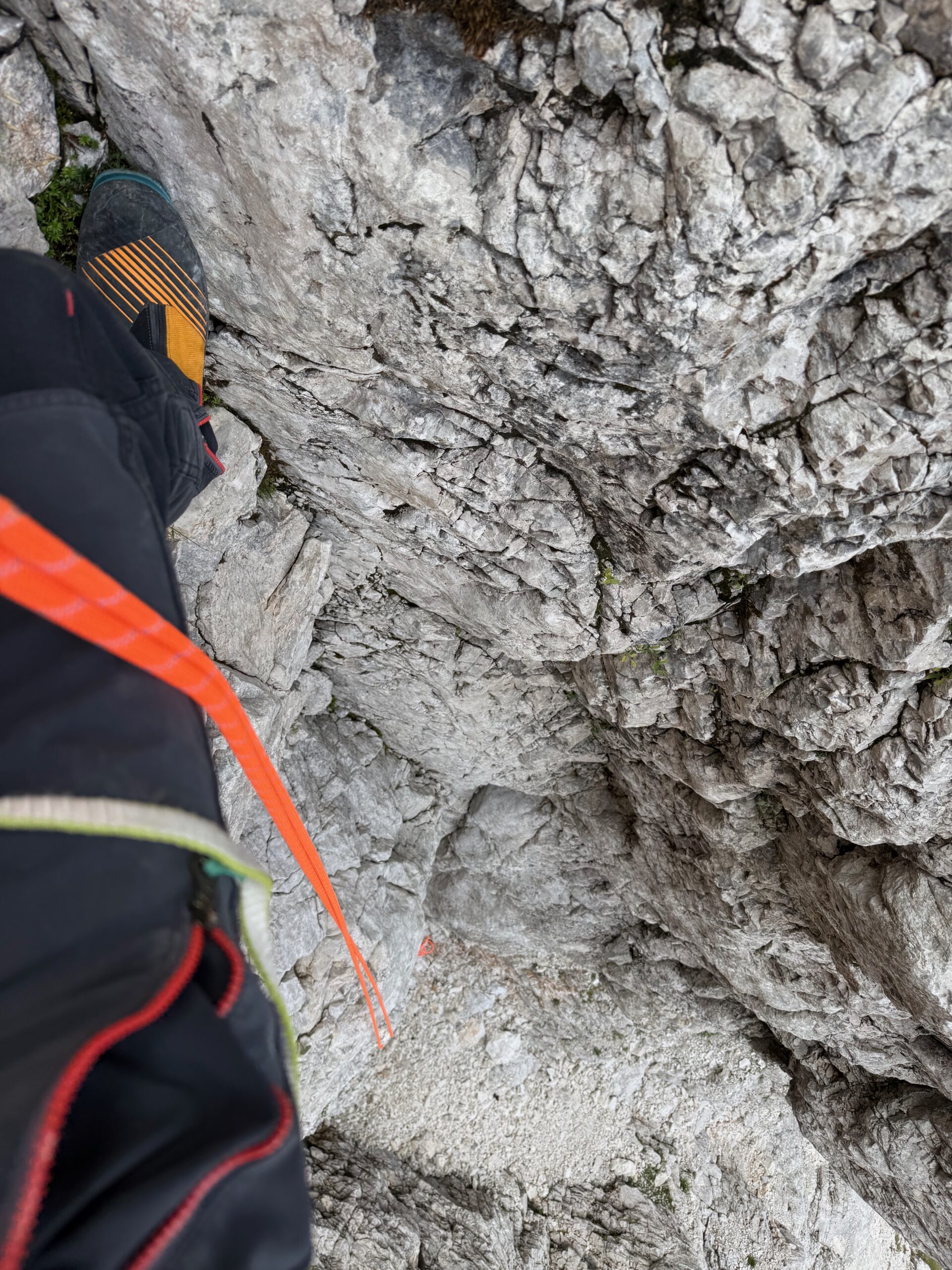
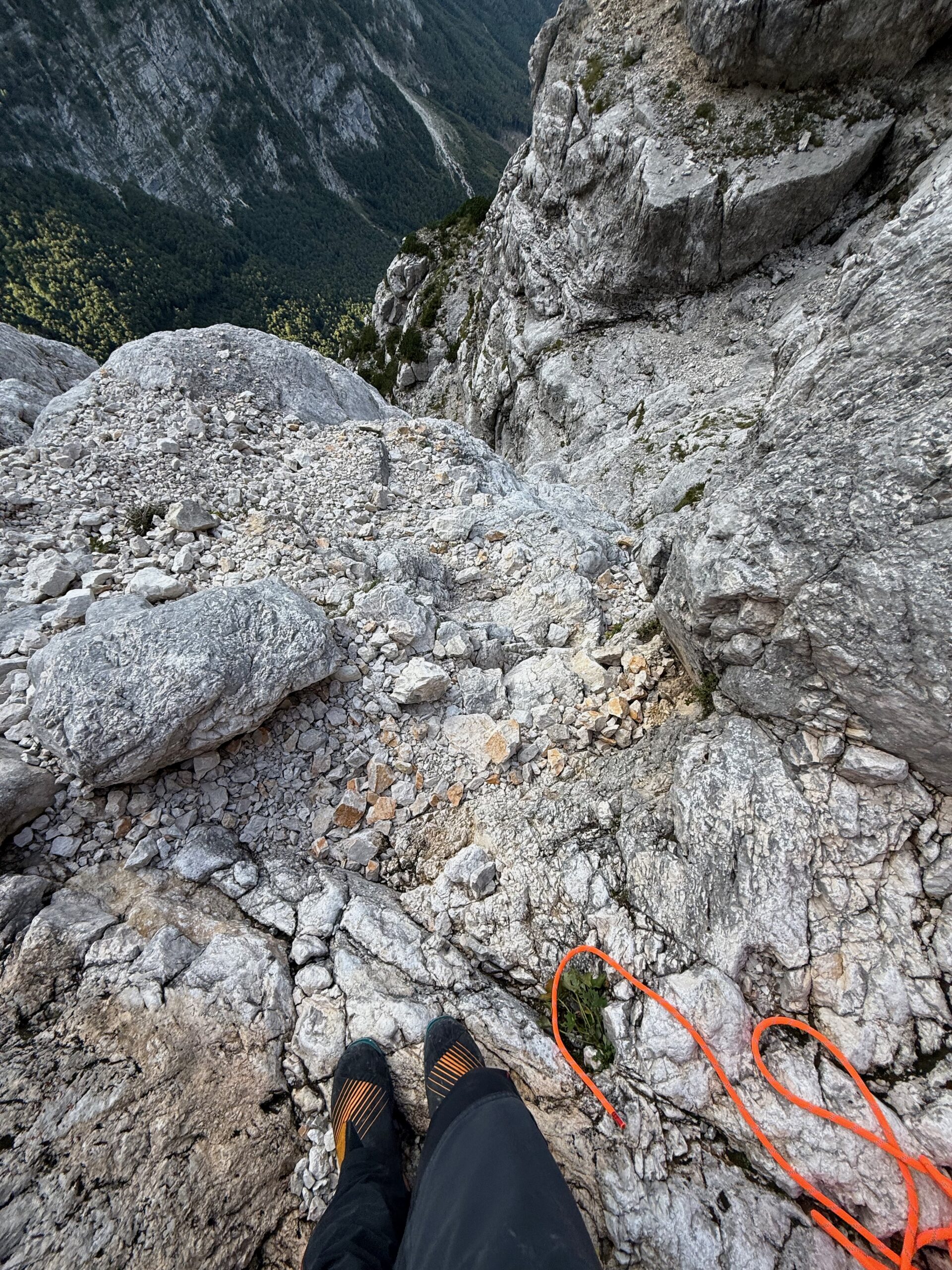
The relief is enormous. With a single rope length, I can descend 20 metres and practically switch off my brain. Once you’ve committed your weight to the piton you’re descending from, it’s simply a matter of lowering yourself down. Much better than having to concentrate fully on every single move while downclimbing. The only challenge left is finding the next abseil anchor each time. Searching for another piton, prusik loop, rope or rock feature I can abseil from. Slowly but surely, I make my way down. The rope gets stuck a few times, but each time I manage to free it with a bit of effort.
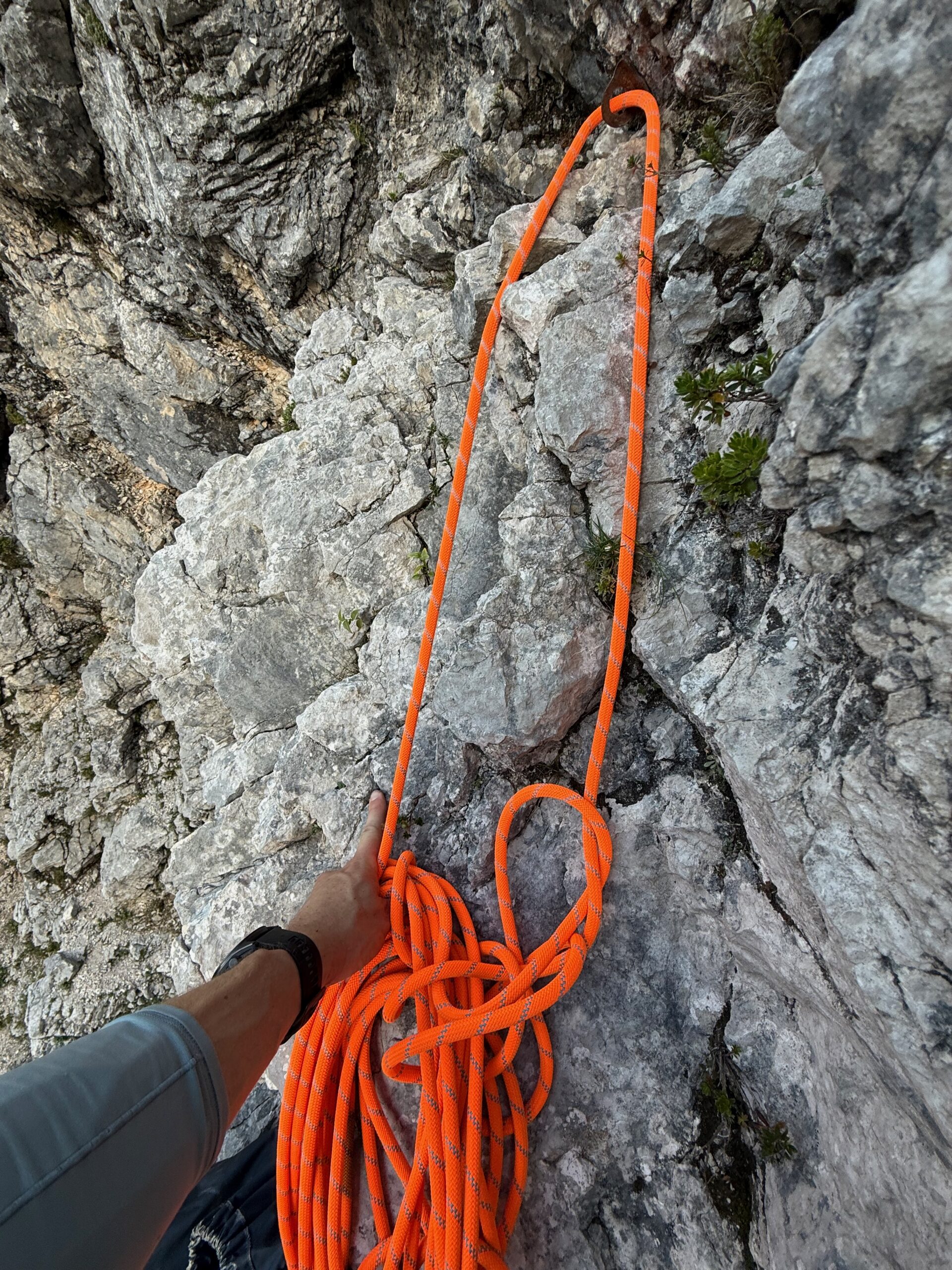
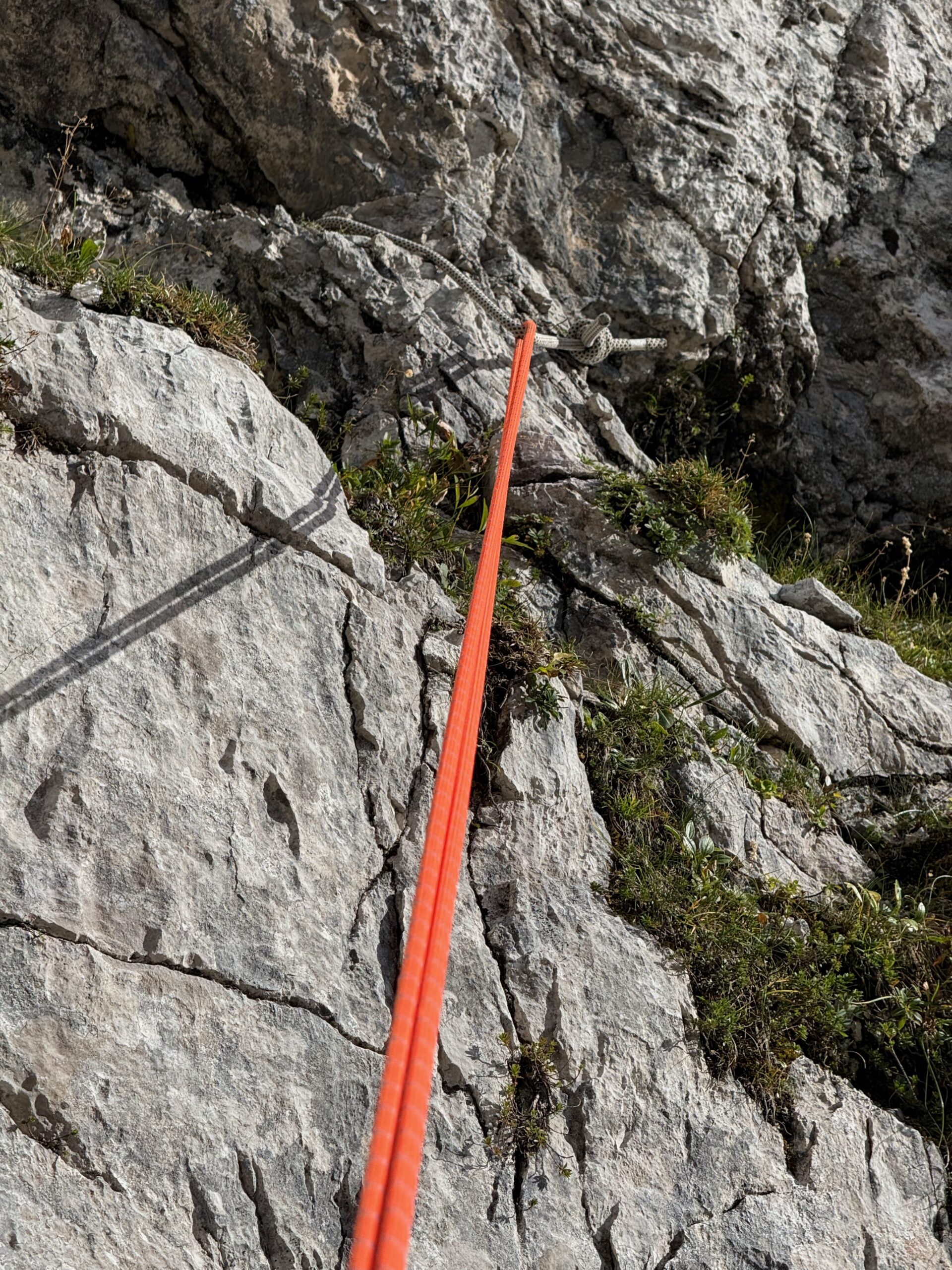
Fweeeew, smack! The rope lands beside me again. I’m crouching slightly to keep it from hitting me in the face. But what’s that sound? I look up, unable to quite place what I’m hearing. BAM! I feel what can only be described as an almighty punch to the face, and immediately realise what happened. My final tug on the rope dislodged some rocks, which came whistling down. And one of them hit me square in the jaw. I carefully feel around. No blood, nothing feels out of place. My teeth are all still there. Good. Must have been a small stone.
And so the hours pass. By late afternoon, the sun even reaches the rock face, and I gradually start to get a better sense of where the route actually goes. Finally, after one last abseil, I reach the starting point of the Slovenian Route. That’s when my watch dies, but fortunately my phone starts picking up a signal again. Now all that’s left is the walk back to the car and a half-hour drive. What a day! I feel an enormous sense of relief and just want to get home as quickly as possible. Eat. Shower. I’m so glad I’ll get to see everyone again. My kids, my wife, my friends.
I record the final stretch of the walk back to the car on my phone. Along the river, I encounter the first people I’ve seen all day. Once I reach the car, I spot a banana and a bottle of water lying on the passenger seat. Oh yes! I’d left those there this morning. What a brilliant idea that was. I enjoy them immensely as I tear down the mountain road a little faster than I probably should. At 8:00 p.m., I’m back at the holiday home, 16 hours after setting off. Requirement number two ticked off as well: home in one piece.
Before going to sleep that evening, I open my laptop one more time. Something is nagging at me. I’d made it so far along the route, with only that final section left. I’d gone wrong near the end, but where exactly does the route go? I close the laptop again and fall asleep with that question still on my mind.


Part 6 – Epilogue
Nine days later, on Wednesday, 23 September 2026, I make a second attempt to climb Triglav via the Slovenian Route. Will I manage to reach the summit of Triglav this time? Find out how the story ends here: Looking the Beast in the Eye.
Curious about the drone footage? Watch the visual route guide to the Slovenian Route.